Newborn Poses To Avoid At Home For Safer Baby Photos
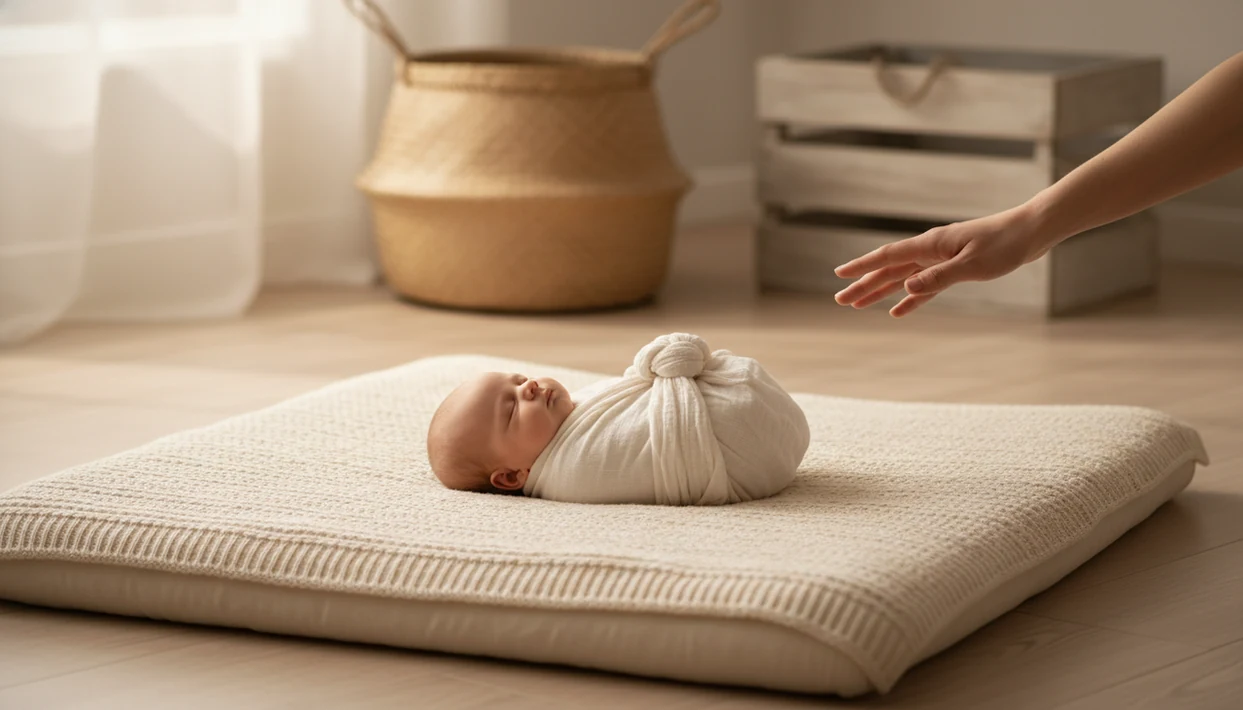
Newborn poses to avoid are any setups where a baby is unsupported, forced into a curled position, balanced on a prop, elevated, hanging, or placed on glass or unstable surfaces. For safer contest-ready photos, choose wrapped, side-lying, back-lying, or parent-held poses where the newborn’s head, neck, airway, hips, and circulation stay supported the entire time.
> Definition: Newborn poses to avoid are baby photo positions that create avoidable risk to a newborn’s head, neck, airway, hips, circulation, or fall safety, especially when parents copy studio-style images without hidden hands, spotters, or composites.
- Do not try froggy, potato sack, hanging, elevated, glass, or unsupported prop poses at home.
- A calm-looking baby is not automatically safe; newborn photos can hide missing support, hidden hands, or editing.
- Safer contest-photo alternatives include wrapped poses, side-lying poses, crib or blanket setups, and parent-held portraits.
Newborn Poses To Avoid: The Safety-First Definition
Newborn poses to avoid are defined by missing support, forced positioning, poor airway alignment, or an unstable setup, not by whether the finished photo looks cute. A pose can be popular and still be wrong for a living room shoot.
Many viral newborn images are composites. An adult hand may support the head in one frame, another hand may support the wrists in a second frame, and editing removes both. The final image looks effortless, but the baby was never truly balancing alone.
That difference matters for contest-ready baby photos. A dramatic pose is not worth copying if it asks a newborn to hold shape, weight, or balance. The safer goal is simple: make the baby look loved, settled, and supported.
The plain crib sheet often wins.
At-A-Glance Unsafe Newborn Poses Parents Should Not Try
The main unsafe newborn poses parents should not try are unsupported head-up poses, froggy pose, potato sack pose, hanging hammock poses, elevated prop poses, glass or mirror poses, and forced curled positions. Each one can hide a different risk.
- Unsupported head-up poses: newborns cannot safely hold their head for a photo.
- Froggy pose: this usually requires hidden adult hands and compositing.
- Potato sack pose: upright wrapping can affect stability, posture, and comfort.
- Hanging hammock poses: fall risk is the problem, even if the fabric looks soft.
- Elevated prop poses: bowls, chairs, beds, and baskets can tip or slide.
- Glass or mirror poses: slipping, glare, breakage, and poor support all stack up.
- Forced curled positions: tight shaping can strain the neck, hips, or circulation.
A pose is also unsafe if the baby resists, startles, cannot settle, or needs to “hold” position without continuous adult support.
5 Newborn Photography Safety Facts For At-Home Photos
Newborn photography safety starts with the baby’s physical limits, not the theme board. These five facts are the ones we want parents to keep beside the rule sheet open on a tablet.
- Newborns should never be expected to hold up their own head, balance unaided, or stay in position without support.
- A full-term pregnancy is usually about 40 weeks, so many photo sessions involve babies who are only days old and still physically fragile source.
- The CDC reports that about 1 in 10 babies in the United States are born preterm, so posing tolerance varies by baby source.
- AAP safe-sleep guidance emphasizes flat, firm, uncluttered sleep surfaces and close supervision, which supports constant attention during photo setups source.
- About 3,400 sudden unexpected infant deaths occur each year in the United States, so photo positioning should never mimic unsafe sleep or leave a baby unattended source.
For at-home photos, a supported pose on a low surface is often safer than a prop-based pose because there is less height, less balancing, and less hidden risk.
How Unsafe Newborn Poses Work Behind The Camera
Unsafe newborn poses often look simple because the camera does not show the safety workflow behind them. Hidden hands, spotters, beanbag support, weighted props, and compositing can all be part of the real setup.
Compositing means combining two or more photos into one final image. In plain language, the baby may be supported the whole time, then the supporting hand is removed digitally. Froggy pose is the classic example. It should not be treated as a one-shot physical pose where the baby balances their head in their hands.
The safety problem is not editing itself. The problem is mistaking an edited illusion for a DIY pose. If the final photo hides the adult support, a parent may copy the image without copying the safety system. Our deeper guide to composite newborn posing explained shows why the behind-the-scenes method matters.
Safer Contest-Photo Alternatives To Unsafe Newborn Poses
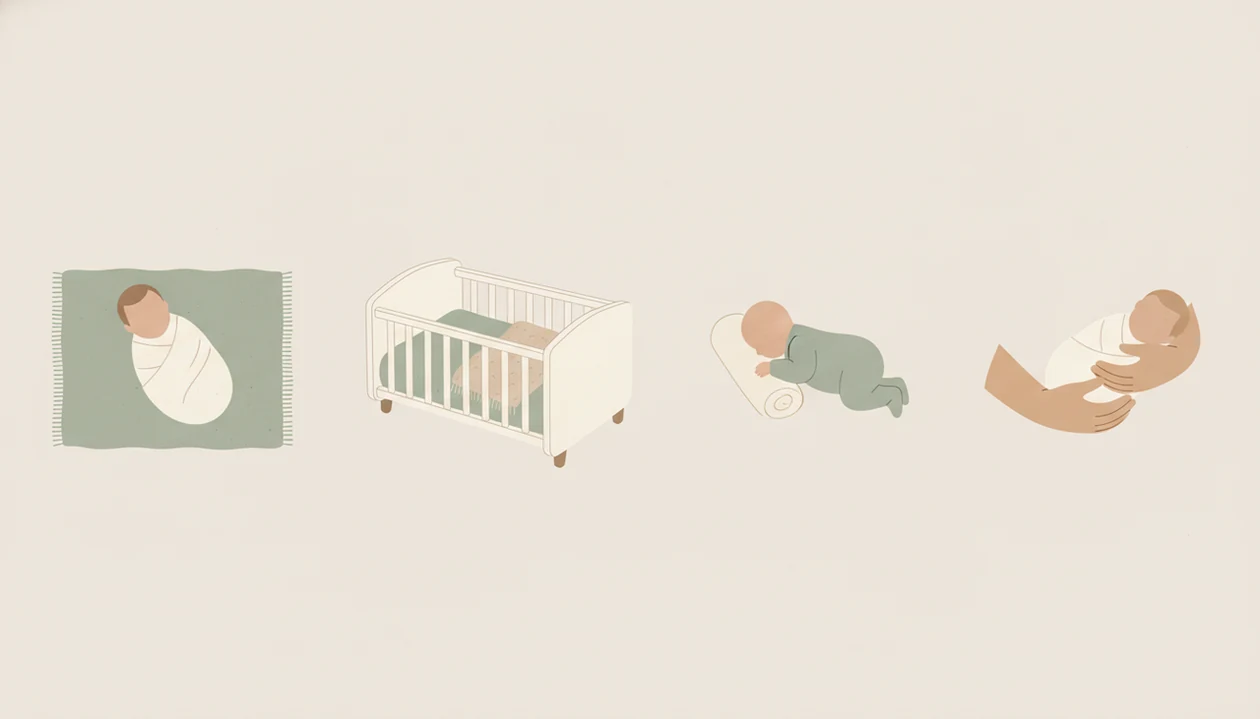
Safer contest-photo alternatives keep the newborn low, supported, supervised, and easy to reposition. Safe lighting, simple styling, and expression often matter more than complex posing.
| Avoid this setup | Safer alternative | Why it works better |
|---|---|---|
| Froggy or unsupported head-up pose | Wrapped pose on a firm, low surface | Head, neck, and body stay supported |
| Elevated basket or bowl | Back-lying blanket portrait | No balancing on a prop |
| Hanging hammock look | Parent-held portrait | Adult support stays visible and real |
| Forced curled pose | Side-lying pose with a loose wrap | Baby can stay relaxed |
| Busy prop scene | Crib or bassinet lifestyle photo | The setup stays simple and readable |
Use a caregiver within arm’s reach, even for a quiet baby. For sibling photos, do not ask a young child to support the newborn alone. Place the baby safely first, then bring the sibling close with an adult ready to intervene.
How to use safer alternatives:
- Choose a low, firm setup before adding blankets or props.
- Support the head, neck, hips, and airway the entire time.
- Place one adult within arm’s reach, not across the room.
- Crop for the entry form after the baby is settled.
- Stop if the baby startles, resists, changes color, or seems uncomfortable.
Common Myths About Unsafe Newborn Poses
The biggest myths about unsafe newborn poses come from confusing a finished image with a safe setup. A photo can look calm, polished, and shareable while still hiding risk.
- Myth: Editing can make any pose safe. Reality: editing can hide risk, but it cannot protect a baby during the setup.
- Myth: If a pose is popular on Pinterest or Instagram, it is safe. Reality: popularity is not proof of a safe workflow.
- Myth: A calm baby means the pose is safe. Reality: stillness does not prove airway, circulation, or fall safety.
- Myth: Newborn photography safety only matters in studios. Reality: DIY at-home photos need the same safety-first mindset.
- Myth: Adult common sense catches every newborn hazard. Reality: newborn-specific risks can be unintuitive; for example, the CDC advises that infants younger than 12 months should not be given honey source.
A wrinkled muslin swaddle and soft gray light around 10 a.m. can make a beautiful image without turning the baby into the prop.
If you want safer themes rather than risky poses, start with safe newborn photo ideas.
Limitations
There is no universally safe pose for every newborn. Prematurity, reflux, jaundice, muscle tone, temperament, feeding timing, and medical history can change what is appropriate.
- This article is educational inspiration, not medical advice.
- It cannot evaluate an individual baby’s health, breathing, tone, or tolerance.
- Stop any setup immediately if the baby resists, startles, changes color, struggles to breathe, or seems distressed.
- Professional-looking images may still be unsafe to copy because hidden support, composites, or spotters may not be visible.
- Props can be risky even when they look soft, cute, or stable in a finished photo.
- Contest aesthetics should never outweigh infant safety.
- If a baby has medical needs or was born early, parents should ask a clinician before planning posed photos.
Clinicians typically recommend keeping infant sleep spaces flat, firm, and uncluttered; photo setups should respect the same safety-first thinking when a baby is lying down.
Tiny socks beside the prop basket can stay. The unstable basket can go.
Parents saving screenshots of Instagram contest rules should also save a safety rule: if support disappears, the pose is not a DIY pose.
When To Ask A Pediatrician Before Newborn Photos
Ask a pediatrician before newborn photos when the baby has any medical history or symptoms that could affect breathing, feeding, tone, or stamina. A quick photo plan can wait; a newborn’s comfort and airway cannot.
This is especially important for babies who were premature, recently hospitalized, or sent home with follow-up instructions. Parents should also check first if there are concerns about reflux, jaundice, poor feeding, unusual sleepiness, breathing noises, color changes, or low or stiff muscle tone. During illness, fever, weak feeding, or a baby who seems “not like themselves,” skip posed photos entirely.
A safer plan after medical clearance is simple and quiet:
- Ask the clinician what positions are appropriate for this baby right now.
- Choose only parent-held, back-lying, or very simple supported photos.
- Keep the baby low, warm, watched, and easy to lift immediately.
- Avoid curling, upright wrapping, props, balancing, or long sessions.
- Stop at the first sign of distress, color change, or breathing trouble, and seek urgent help if those signs appear.
The best contest photo is still one where the baby looks safe before they look styled.
FAQ
Is froggy pose safe for newborn photos at home?
Froggy pose is not a safe DIY newborn pose because it requires continuous support and compositing. Parents should choose supported wrapped or back-lying poses instead.
What newborn poses are unsafe?
Unsafe newborn poses include unsupported, hanging, elevated, forced curled, glass, mirror, and unstable prop setups. Any pose that depends on a newborn balancing or holding position is unsafe.
Can parents try newborn poses at home?
Parents can try simple supported poses at home. They should avoid advanced studio-style setups that require spotters, hidden hands, or composites.
Are basket newborn photos safe?
Basket photos are only lower risk when the basket is stable, low, padded, and watched by a spotter. Avoid tall, narrow, tipping, rough, or unstable baskets.
Are hanging baby photos safe?
Hanging newborn photos should not be attempted at home. Many hanging images are composites, not real unsupported setups.
Is potato sack pose safe for newborns?
Potato sack pose can restrict posture or create stability problems. It should not be copied without trained professional support and continuous spotting.
Can newborns hold their head during photos?
Newborns cannot safely support their own head for posed photos. Their head and neck need adult support throughout the setup.
Are glass newborn photos safe?
Glass and mirror newborn photos can introduce slipping, breakage, glare, and support risks. A plain blanket or crib setup is a safer at-home choice.
When should parents stop a newborn photo pose?
Parents should stop immediately if the baby resists, startles, fusses, changes color, struggles to breathe, or seems uncomfortable. Safety matters more than finishing the shot.
What newborn poses are safest at home?
The safest at-home options are usually wrapped, back-lying, side-lying, crib, blanket, and parent-held poses with supervision. Keep the baby low, supported, and watched the entire time.