Baby Photo Contest Rights Explained Before You Enter
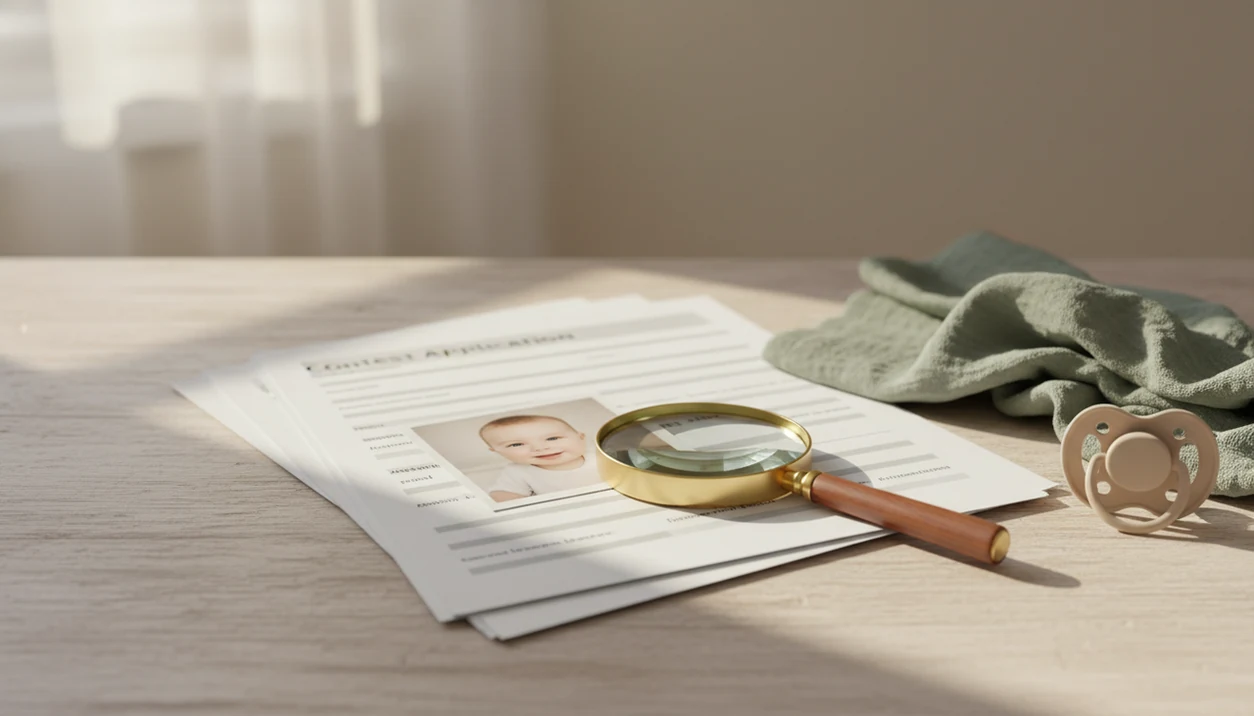
Baby photo contest rights explained means you usually keep copyright to your baby’s photo, but you may give the contest sponsor broad permission to display, edit, share, advertise with, and keep using the image after entry. Read the Official Rules, release, privacy policy, voting terms, and removal language before uploading anything.
Definition: A baby photo contest release is the permission a parent or legal guardian gives a contest organizer to use a child’s submitted image under the contest’s stated rules.
TL;DR
- Most contests let parents keep copyright while granting the sponsor a royalty-free license to use the photo.
- A contest photo release may allow cropping, editing, social posting, advertising, winner announcements, and future promotions.
- Deleting an entry does not always cancel the rights already granted in the rules.
Baby Photo Contest Rights Explained at a Glance
The short version is this: parents usually keep the copyright to a baby photo, but the contest sponsor may receive broad usage rights once the entry is submitted. Those rights can cover website galleries, voting pages, social posts, ads, email campaigns, winner announcements, and future promotion.
Entry often counts as acceptance of the Official Rules and any baby photo release attached to them. That matters even if the upload screen feels casual, like choosing a square crop box while a diaper sleeve sits in the corner of the test shot.
Read before uploading.
This guide is general information, not legal advice. Exact rights depend on the contest wording, local law, who took the photo, and whether every needed parent, guardian, photographer, or studio permission is in place.
Five Contest Photo Rights Facts Parents Should Know
- Copyright ownership and usage license are different. You may own the photo and still give the sponsor permission to use it in many places.
- Royalty-free usually means no extra payment. If the rules say the license is royalty-free, the sponsor may not owe you more money for approved uses.
- Perpetual or indefinite rights may survive the contest. A contest can end on Sunday, but the sponsor’s permission may continue if the release says so.
- Sponsors may edit, crop, resize, or adapt entries if rules allow. That can include trimming a bonnet, fitting a banner, or placing the image in a winner collage.
- Public entries can be copied by people outside the contest. A sponsor can set rules for its own use, but it cannot fully control screenshots, reposts, scraping, or saved images.
Contest photo rights are often broader than parents expect because the license, not the prize, controls later image use.
How Baby Photo Contest Rights Work Behind the Scenes
Baby photo contest rights work through a mix of copyright ownership, license language, release terms, and platform rules. In plain terms, submitting the image can act like contract-style acceptance of the Official Rules, even when the button simply says “Enter.”
For U.S. readers, the U.S. Copyright Office explains that copyright generally protects original photographs when they are fixed in a tangible form, while separate licenses can give others permission to use the work: https://www.copyright.gov/circs/circ01.pdf.
The parent or legal guardian often grants a license while keeping copyright. Sponsors need that license to run galleries, voting pages, social media posts, winner announcements, and marketing. Words like worldwide mean use is not limited to one country. Perpetual means no clear end date. Transferable or sublicensable means another party may be allowed to use the image. Derivative works means altered versions, such as crops, graphics, or adapted layouts.
Copyright Ownership Versus Contest License
Copyright is ownership of the image. A contest license is permission to use it under stated conditions.
Official Rules Versus Photo Release
The Official Rules explain the contest. The release explains image, name, likeness, and publicity permissions.
Baby Photo Release Clauses That Need a Second Look
Some baby photo release phrases are worth reading twice because they decide how far the sponsor can go. We usually slow down when the rules sit beside a cheerful upload form, especially if the parent is also smoothing a wrinkled backdrop by hand and trying to finish before nap time ends.
| Release phrase | What it may mean for parents |
|---|---|
| Royalty-free license | The sponsor can use the image without paying additional royalties. |
| Worldwide license | Use may be allowed across countries, websites, platforms, and campaigns. |
| Perpetual or irrevocable license | Permission may continue indefinitely and may be hard to withdraw. |
| Edit, crop, modify, or derivative works | The sponsor may resize, alter, caption, combine, or adapt the photo. |
| Name, likeness, city, state, or story | The sponsor may use identifying details with the photo if allowed. |
| Waiver of inspection, approval, or compensation | You may not get to review uses before publication or request payment later. |
For cautious parents, a narrower license is often easier to accept than a broad one because it limits duration, purpose, and reuse.
Can a Contest Use My Baby Photo in Ads?
Can contest use my baby photo in ads? The answer depends on the wording of the baby photo release and Official Rules, not on the contest’s friendly design or recognizable logo.
Some rules allow only winner publicity, such as posting a winning photo on a contest page. Other rules allow broader commercial advertising, including sponsor campaigns, paid social ads, email promotions, or future marketing. Those are very different permissions.
A charity name, familiar brand, or local business sponsor does not automatically make the rights parent-friendly. Good intentions and broad legal language can sit on the same page. A parent may see a tiny name sign turned backward in the thumbnail grid, then miss a clause allowing future promotional use.
No general guide can decide a specific contract without reviewing its exact wording. If a clause feels unclear or too broad, ask the organizer before entering.
If the rules mention advertising, paid social campaigns, sublicensing, or use of a child’s name and likeness, treat that as a higher-risk clause. Ask the organizer for a plain-language explanation in writing before entering.
Contest Photo Rights for Professional, Phone, and AI-Assisted Baby Photos
The source of the image affects whether you can submit it. Parents often own phone photos they personally take, but it is still wise to consider the other parent or legal guardian before public entry, especially when the photo includes a full name, hospital bracelet, or location clue.
Professional Newborn Photographer Permissions
Professional newborn photos may be controlled by a photographer contract, even if you paid for the session. Many studios allow personal sharing but restrict contests, commercial use, editing, or prize submissions. Written permission is safer than guessing from a download gallery.
AI Newborn Image Disclosure Questions
AI-enhanced images raise unsettled questions about copyright, authenticity, disclosure, and contest eligibility. If you used generated backgrounds, face changes, or composite edits, read the AI baby photos contest rules before submitting.
Contest-ready images should avoid unsafe newborn posing or misleading edits. Good newborn and baby photo contest ideas, photography tips, milestone shoots, and ai newborn photo inspiration deliver safer creative choices and clearer entries, not permission to ignore release terms or pose safety.
Common Baby Photo Contest Rights Myths
Several rights myths make parents underestimate what they agreed to. The fine print can matter more than the upload caption.
- Myth 1: “Keeping copyright means the sponsor cannot use the image.” You can keep copyright while granting a broad license for display, ads, promotion, and reposting.
- Myth 2: “Rights end when the contest ends.” Some licenses expire, but others are perpetual, indefinite, or tied to future sponsor promotions.
- Myth 3: “Deleting the entry always cancels permission.” Removal may hide the entry, but it may not revoke rights already granted.
- Myth 4: “A famous sponsor means parent-friendly rules.” Large brands can still use broad release language.
- Myth 5: “Private voting links eliminate online image risk.” Links can be forwarded, screenshotted, indexed, or copied.
The awkward part is practical. A parent may save screenshots of Instagram contest rules before posting, then discover the website rules say something broader.
Baby Photo Contest Privacy Risks Beyond the Sponsor
Baby photo contest privacy risk does not stop with the sponsor’s release. Public galleries can be screenshotted, copied, reposted, indexed, or scraped by unrelated people and tools.
Online sharing of children’s photos is common, but the exact rate varies by survey and country. Pew Research Center has reported extensively on parents, children, and digital sharing behavior, including privacy concerns around children’s online lives: https://www.pewresearch.org/internet/2020/07/28/parenting-children-in-the-age-of-screens/. Academic work on “sharenting” also warns that parent-posted images can create a child’s digital footprint before the child can consent: https://scholarlycommons.law.emory.edu/elj/vol66/iss4/2/.
That does not mean every contest is unsafe. It means the decision should include privacy, not just prizes. A plain white crib sheet, soft gray light around 10 a.m., and a phone held just above mattress height can make a lovely entry without showing a street sign, geotag, hospital band, or full legal name.
For a deeper pre-entry review, use a baby photo contest privacy checklist before uploading.
Baby Photo Contest Rules Checklist Before Entry
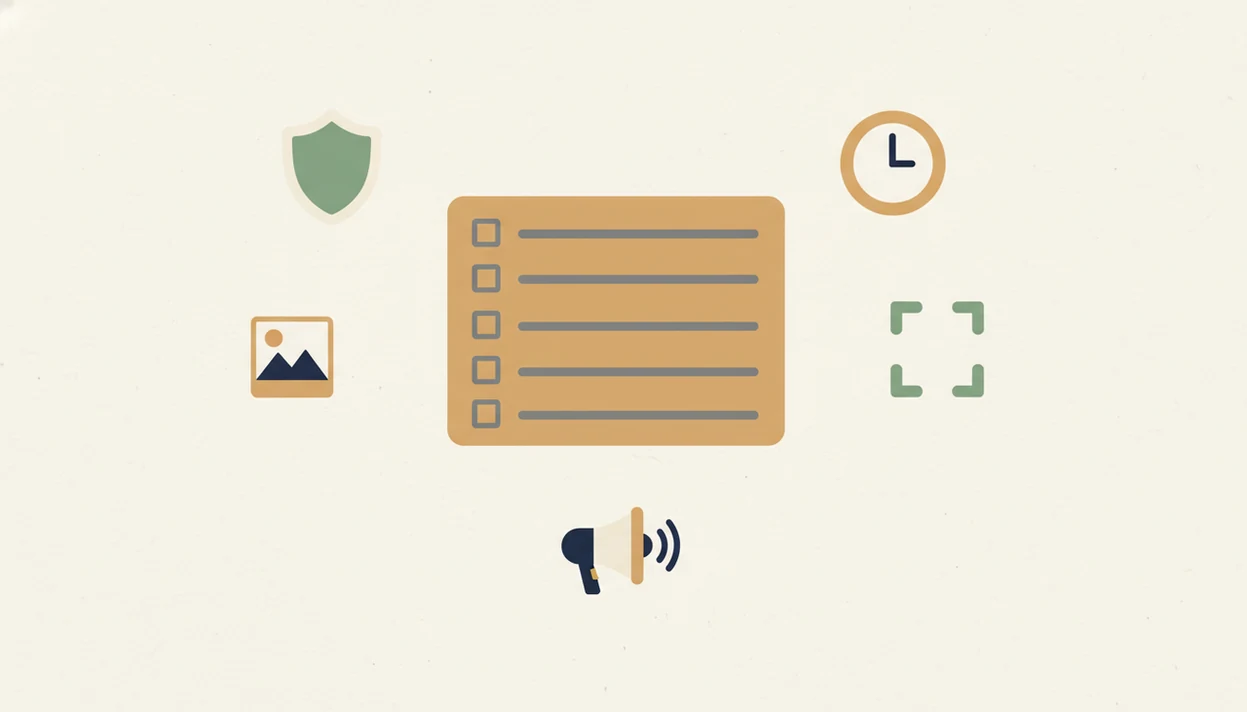
Use this checklist before uploading a newborn or baby photo to any contest. It is slower than tapping “submit,” but it catches the clauses that matter.
- Confirm the entrant role. Check that the entrant must be a parent or legal guardian.
- Verify image ownership. Make sure the uploader owns the photo or has written permission from the photographer or studio.
- Read sponsor use clauses. Look for display, ads, social media, sublicensing, editing, and duration language.
- Review voting and money terms. Check fees, paid voting, fundraising claims, prize odds, taxes, and eligibility rules. Paid models deserve extra care, so compare the terms with guidance on paid vote baby contests.
- Check privacy and removal language. Read the privacy policy, data retention section, contact path, and removal request process.
- Save the rules. Keep screenshots or PDFs of the Official Rules in effect when you entered.
Metadata matters too. Look at the metadata screen before posting if your phone or platform saves location details.
Newborn Photo App Rights and Parent-Safe Planning
Parent-safe planning means choosing the image and reading the rights language together. A contest-ready setup should avoid private details like full name, home address, hospital band, school, daycare logo, geotag, or visible mail on the dresser.
Prefer simple milestone setups, neutral backgrounds, and safe awake or naturally sleeping poses. A caregiver should stay within arm’s reach, especially near props, blankets, or a beanbag setup. Avoid edits that make unsafe posing look real, and label AI composites when the rules require it.
Newborn Photo App is a baby photo contest app that helps parents plan, edit, and share contest-ready newborn photos. Tools like Newborn Photo App can help families think through theme, crop, caption, and format, but the parent still needs to read the Official Rules before entry.
A calm photo plan makes the rights review easier.
When to Ask a Lawyer or Contest Organizer Before Entering
Ask before entering when the rules mention advertising, sublicensing, perpetual rights, paid licensing, or language that feels broader than the contest itself. If the question is practical, start with the organizer; if money, prizes, refusal, or a dispute is involved, consider a lawyer.
A short written question before upload is easier than trying to unwind permission after the photo is live. This is especially true when the entry shows a newborn’s face clearly, includes a family story, or may be reused beyond a winner announcement.
- Pause when you see terms like ads, commercial use, sublicensable, irrevocable, perpetual, or future promotions.
- Ask the organizer to explain removal, deletion, opt-out, and retention language in plain writing if the rules are unclear.
- Consult a lawyer before agreeing to paid licensing, valuable prizes, sponsor contracts, disputed ownership, or a refused takedown.
- Save screenshots, PDFs, email replies, upload pages, privacy terms, and the exact rule version before you submit.
- Compare the written answer with the Official Rules, because a friendly message should not contradict the binding terms.
Legal and Privacy Sources Behind This Guide
This guide is grounded in public copyright, consumer-protection, and child-privacy materials, but it is still general information. It cannot replace advice from a lawyer who reads the exact contest rules, release, and facts around your photo.
For copyright basics, the U.S. Copyright Office explains how original photographs can be protected and how permission to use them is separate from ownership: source. For privacy, advertising, and confusing interface design, the FTC’s consumer guidance and dark-pattern work are useful when a contest mixes cute galleries with hard-to-find terms: source. For child privacy, academic sharenting research helps frame why a baby’s online image can become part of a long-term digital footprint: source.
Use those sources in a practical order:
- Check who owns or controls the photo before entry.
- Read the contest’s advertising, privacy, and removal language.
- Weigh the child’s future privacy, not just today’s prize or votes.
- Ask for legal advice when the exact wording matters.
Limitations
This article has important limits. It explains common contest photo rights patterns, but it does not review your specific contract or provide legal advice.
- Local law and exact contract wording control specific rights.
- Contest practices vary by sponsor, platform, country, prize structure, and voting model.
- There is limited formal research specific to baby photo contests.
- Even reputable contests cannot stop all screenshots, reposts, scraping, or third-party misuse.
- AI-generated or AI-enhanced newborn image law is still developing.
- Deletion or removal promises depend on the organizer’s systems, backups, partners, and enforceability.
- Professional photos may involve photographer contracts that are separate from contest rules.
- Privacy policies and terms can be difficult to understand; the FTC has warned that confusing design, hidden terms, and dark-pattern interfaces can undermine meaningful consumer choice: https://www.ftc.gov/reports/bringing-dark-patterns-light.
- If money, advertising, licensing, or a dispute is involved, a lawyer can review the exact language.
If you already uploaded an entry and want it taken down, the process is different from ownership review. The practical steps are covered in baby photo removal from contest site.
FAQ
Who owns the copyright to my baby photo after I enter a contest?
The photographer or copyright holder usually owns the baby photo after contest entry. The contest rules may still grant the sponsor a license to use the image.
Can a contest use my baby’s photo after I submit it?
Yes, a contest can use your baby’s photo after submission if you agreed to rules granting that permission. Read the Official Rules and release for duration, purpose, and advertising language.
What is a baby photo release in a contest?
A baby photo release is permission from a parent or legal guardian for the organizer to use a child’s image under stated terms. It may also cover name, likeness, story, city, or winner publicity.
Can I delete my baby photo contest entry later?
Deletion depends on the contest platform and organizer process. Removing an entry may not revoke rights already granted in the release.
Do baby photo contest rights expire when the contest ends?
Some contest licenses expire after the promotion, but others are perpetual or indefinite. The Official Rules should state the duration.
Can sponsors edit, crop, or repost my baby photo?
Sponsors can edit, crop, resize, adapt, or repost a baby photo if the release allows those uses. Parents should look for words like modify, derivative works, and social media promotion.
Can I enter professional newborn photos in a baby contest?
Professional newborn photos may require permission from the photographer or studio. Check the photo contract before entering any contest.
Are paid voting baby photo contests safe to enter?
Paid voting contests require careful review of fees, billing, voting rules, fundraising claims, prizes, and sponsor credibility. The rules should explain how votes are counted and whether purchases are refundable.
Are AI baby photos allowed in photo contests?
AI-assisted baby photos are allowed only if the contest rules permit them. They may raise disclosure, copyright, authenticity, and safety-presentation questions.
Is baby photo contest rights guidance legal advice?
No, this guidance is general information about common contest rights issues. Parents should consult a lawyer for advice about a specific release, dispute, or contract.