Is It Safe to Post Baby Photos Online for Contests?
No public upload is fully safe: is it safe to post baby photos online depends on who can see the image, what details it reveals, and what rights the contest or platform claims. The safer choice is private sharing, minimal identifying details, no location clues, and careful review of contest rules before submitting.
Scope: This guide offers privacy and online-safety information for parents considering baby photo posts or contests; it is not legal advice and cannot guarantee removal, privacy, or protection after a public upload.
TL;DR
- Public baby contest photos can be copied, screenshotted, reused, or archived outside a parent’s control.
- The safest contest-ready baby photos avoid full names, exact birthdays, location tags, visible addresses, school names, and other identity clues.
- Before entering any baby photo contest, read who can view the entry, how long it stays online, and what image rights you grant.
Baby Photo Online Safety at a Glance
Public baby photo posting is never fully risk-free, especially when the image appears on a contest page, voting gallery, hashtag feed, or open social profile. Private family sharing limits exposure, but a public contest entry can be viewed, saved, reshared, or indexed by people you do not know.
The practical answer to is it safe to post baby photos online is “safer in private, riskier in public.” Use the smallest audience possible, remove identifiers, avoid location clues, and reject contests that ask for broad reuse rights.
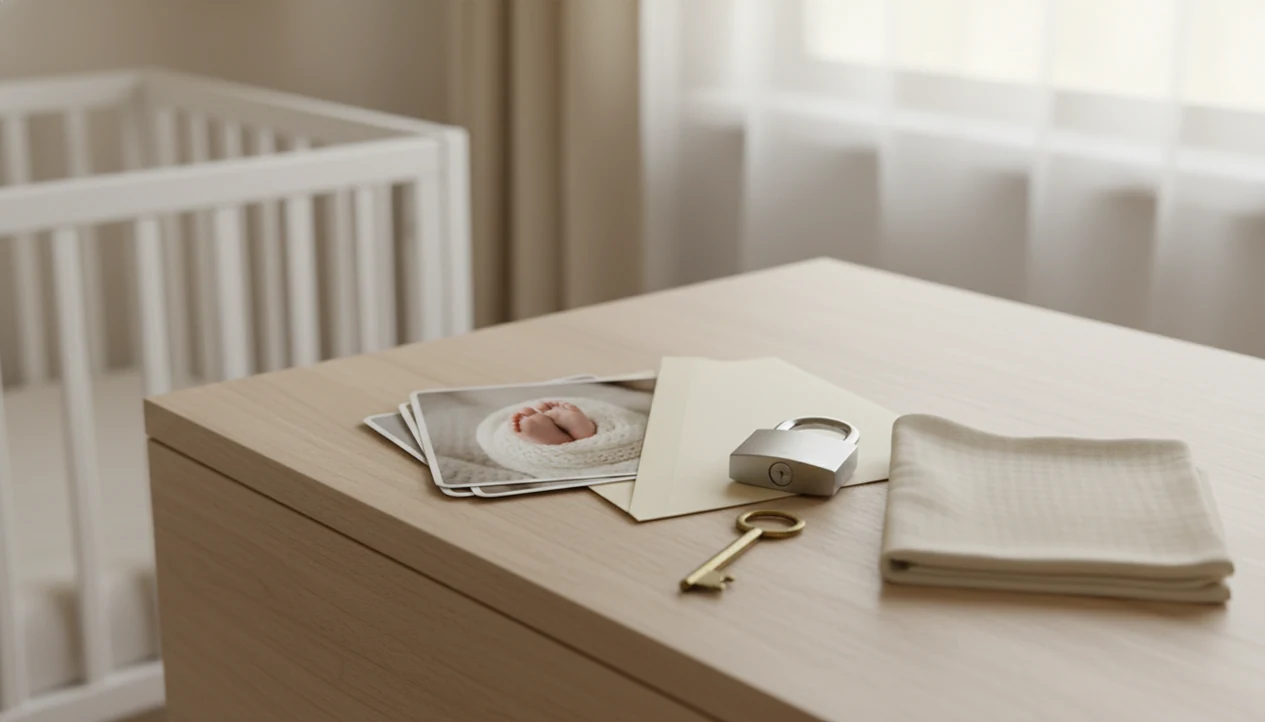
A contest-ready setup can still be sweet without giving away too much. We like the simple version: a plain white crib sheet, soft window light, and a crop that keeps the room out of frame.
Small audience. Fewer clues.
Five Facts About Posting Baby Photos Safely
- Public photos are copyable. If someone can view a baby photo, they may be able to save it, screenshot it, repost it, or keep it after you delete your original post.
- Identity clues stack up. A face plus a full name, exact birthday, hospital name, school logo, or home-area clue raises sharenting privacy risk.
- AI changes the risk profile. Ordinary child images can be manipulated, remixed, or used in synthetic media more easily than most parents expect.
- Safer posts reveal less. Use private audiences, face-free angles, removed metadata, and clean backgrounds without street signs, house numbers, or uniforms.
- Contest risk depends on rules. Visibility, voting links, image licenses, and archive policies matter as much as the photo itself.
The safer contest-ready photo is usually the one with fewer identifying details, because privacy risk often comes from the whole post rather than the baby’s face alone.
How Baby Photo Online Sharing Works Behind the Scenes
Online baby photo sharing works by storing the image on a platform, distributing it through feeds, and sometimes exposing it to search, recommendations, advertisers, analytics systems, contest partners, or outside viewers. Privacy settings reduce the audience, but they do not stop screenshots, account compromise, resharing, or platform-level access.
The technical terms are metadata and indexing. Metadata can include file details or location signals. Indexing means a page may become discoverable through search or internal platform tools. In plain English, a cute newborn entry can become part of a searchable identity trail.
Scale matters. Pew Research Center reports that 71% of U.S. adults have used Facebook, 47% have used Instagram, and 33% have used TikTok, according to its Social Media Fact Sheet: https://www.pewresearch.org/internet/fact-sheet/social-media/. A baby photo on those platforms is not sitting in a family album; it is moving through systems built for sharing.
A diaper sleeve in the test shot can say more than intended.
Sharenting Privacy Risks in Baby Photo Contests
Do baby photo contests create different privacy risks than normal family sharing? Yes, because contests often add public display, voting pages, social promotion, sponsor access, and broad image permissions to the usual risks of posting online.
A contest may require a parent to share a link, gather votes, accept promotional reuse, or leave the entry in an archive after judging ends. That is data permanence, not just stranger danger. Research in Pediatrics describes sharenting as a child-privacy concern because parents can create searchable digital footprints before children can meaningfully consent: https://publications.aap.org/pediatrics/article/140/Supplement_2/S92/34180/Sharenting-Children-s-Privacy-in-the-Age-of.
Before entering, read the baby photo contest rights explained guide if the rules mention sublicensing, perpetual use, sponsor promotion, or “worldwide” rights.
We have seen parents screenshot Instagram contest rules before posting. Good habit.
Post Baby Photos Safely With Caption and Location Rules
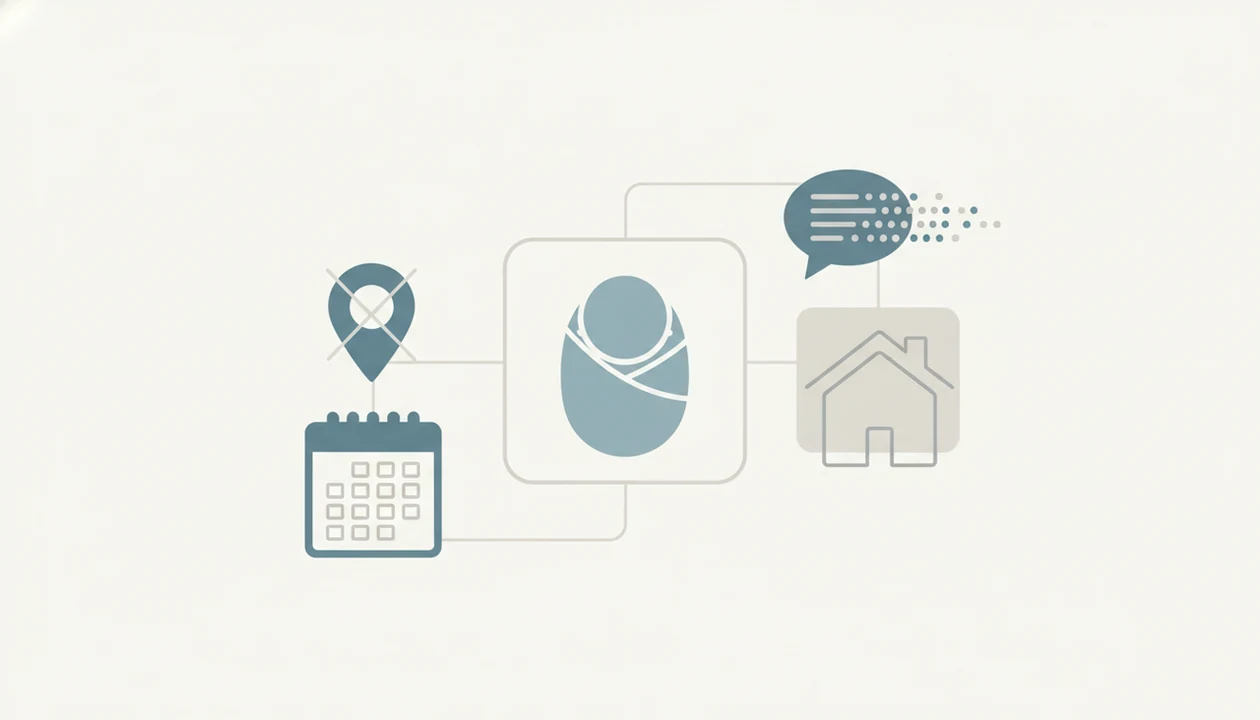
Use caption and location rules to reduce baby photo online safety risks, but do not treat them as a full shield. A public post can still be copied even if the caption is careful.
The Federal Trade Commission also advises families to limit children’s personal information online and be careful about names, locations, and account privacy settings: https://consumer.ftc.gov/articles/protecting-your-childs-privacy-online.
Three practical rules:
- Name rule: Avoid full names, exact birth dates, hospital names, daycare names, school names, uniforms, and milestone details that identify routines.
- Location rule: Turn off geotags, remove metadata where possible, and crop out house numbers, license plates, street signs, and distinctive landmarks.
- Context rule: Use nicknames, broad ages, blankets, props, close crops, or detail shots instead of revealing the nursery, front porch, or local park.
Safer caption examples
Try “our little fall pumpkin” instead of “Emma Rose, born October 12 at Valley Hospital.” A mini pumpkin near the crib rail can carry the theme without carrying identity details.
Background clues to crop out
Crop out mail, medical paperwork, street views, school calendars, house numbers, and anything with a family surname. The awkward square crop box on entry forms can help, but check the preview twice.
Baby Contest Privacy Decision Table
A baby photo is usually safer for contest submission when it shows less identity, uses limited context, and appears under clear rules. Skip public submission if the contest claims broad rights, exposes the child’s full identity, or keeps entries permanently visible.
| Contest situation | Privacy level | Decision | What to do |
|---|---|---|---|
| Face-free detail shot, nickname only, no geotag, clear limited-use rules | Low risk | Post | Submit if the rules and audience feel acceptable. |
| Baby’s face visible, first name used, public voting link, unclear archive policy | Medium risk | Revise | Crop tighter, remove identifiers, and check the baby photo contest privacy checklist. |
| Full name, exact birth date, hospital tag, broad promotional rights, permanent gallery | High risk | Do not post | Use private family sharing or a face-free contest-style image instead. |
For cautious families, private sharing is often easier than public contest posting because it limits both audience size and long-term discoverability.
Common Myths About Baby Photo Online Safety
Private accounts are safer than public profiles, but they are not always safe. Approved followers can screenshot, download, forward, or repost. Accounts can also be compromised.
A photo without text can still reveal information. Background clues, geotags, face recognition, matching outfits, hospital bracelets, or a familiar front door may identify a child or location. We once caught a pacifier clip and a pediatric appointment card in the corner of a test shot. Not dramatic. Still worth removing.
Only explicit or embarrassing images are not the only concern. Ordinary cute photos can be scraped, indexed, manipulated, or reshared outside the original audience.
Contest photos also may not stay inside the contest. Rules can allow sponsor use, winner galleries, email promotion, and social reposting. Baby photo contest ideas, photography tips, milestone shoots, and AI newborn photo inspiration should deliver safer creative options, not pressure to trade privacy for attention.
Safer Sharing Choices for Contest-Ready Newborn Photos
Safer sharing choices include private albums, invite-only groups, limited-time links, close-family messages, printed keepsakes, and contest-style photos that reveal less. These options let families celebrate without placing every detail into a public feed.
Lower-exposure photo styles:
- Tiny hands or feet: Close crops feel personal without showing the full face.
- Swaddled distance shots: A caregiver stays within arm’s reach while the image keeps identity soft.
- Back-of-head portraits: These work well near a window with soft gray light around 10 a.m.
- Prop-led scenes: A seasonal ribbon around a swaddle can suggest a theme without showing the room.
- Printed keepsakes: Grandparents may value a small print more than a public voting link.
Tools like Newborn Photo App can help families plan safe, supervised ideas, crop for the entry form, and compare contest-ready newborn photos without relying on risky posing or overexposure. For AI edits, check AI baby photos contest rules before submitting.
When to Get Help After a Baby Photo Is Misused
Get help quickly if a baby photo is reposted in a sexualized, threatening, exploitative, stalking, or extortion context. For ordinary unwanted reposts, start with documentation and takedown requests; for serious misuse, escalate beyond the platform.
- Save evidence before you ask for removal. Capture screenshots, page URLs, dates, usernames, profile links, captions, comments, and the contest rules or license page that applied when you entered.
- Report the image in every place it appears. Use the platform’s child-safety or privacy report tools, contact the contest owner or host, and request search-result removal if the page is indexed.
- Use the NCMEC CyberTipline for severe child-image misuse. If the image is sexualized, exploitative, coercive, or paired with threats involving a child, make a CyberTipline report rather than treating it as a normal copyright complaint.
- Contact local law enforcement when safety risks appear. Threats, stalking, extortion, impersonation, or identity theft deserve a police report and a clear evidence folder.
- Ask a privacy attorney about repeated or disputed use. Legal advice may help with rights conflicts, licensing claims, sponsor misuse, or reposting that continues after takedown requests.
Limitations
No online privacy checklist can make a publicly posted baby photo fully safe. The honest goal is risk reduction, not a guarantee.
- A public baby photo can be saved, copied, screenshotted, reshared, or archived outside your control.
- Privacy settings reduce exposure, but they do not prevent screenshots, breaches, account compromise, or forwarding by trusted viewers.
- The exact likelihood of AI misuse for any one child is hard to quantify.
- Long-term research on which sharenting practices cause later harm remains limited.
- Search removal requests may help with sensitive personal information, but they do not erase every copy from the internet.
- Contest rules can change, and sponsor use may be broader than parents expect.
- Families with strong privacy preferences may reasonably avoid public baby contests entirely.
If an image already spread beyond your control, a baby photo removal from contest site process may help, but copies can remain elsewhere.
FAQ
Is Facebook safe for baby photos?
Facebook privacy settings reduce visibility, but they do not stop screenshots, resharing, platform access, or account compromise. Public posts and shared albums carry more risk than small, trusted groups.
Is Instagram safe for baby photos?
Instagram is riskier when accounts are public, hashtags are used, geotags are added, or reels are promoted for contests. Followers can also screenshot or reshare posts outside the intended audience.
Are private accounts really safe?
Private accounts are safer than public posting, but they are not fully private. Approved viewers can copy, save, forward, or screenshot baby photos.
Should I hide my baby’s face?
Face-free, distance, back-of-head, or detail shots reduce identity and face-recognition risk. They do not remove all risk if captions or backgrounds reveal private details.
Can captions reveal private information?
Yes. Full names, exact birth dates, hospitals, locations, routines, and milestone details can help identify a child.
Do geotags make photos risky?
Geotags can reveal home areas, travel patterns, hospitals, parks, or regular family locations. Background clues can reveal similar information even without a geotag.
Are baby photo contests safe?
Baby photo contest safety depends on visibility, official rules, image rights, voting pages, and long-term archiving. Newborn Photo App encourages parents to review those details before submitting.
Can baby photos be misused by AI?
Yes, AI tools can manipulate or remix ordinary child images. The exact risk to one child is hard to measure, but public images are easier to access.
What baby photos should I avoid posting?
Avoid bath photos, medical settings, visible addresses, school identifiers, full-name captions, exact birthdays, and embarrassing images. Also avoid any photo your child may reasonably dislike later.
Can I remove baby photos later?
You can delete your post, request platform takedowns, or ask search engines to remove sensitive results. Removal is limited because screenshots, reposts, archives, and downloaded copies may remain.