
Baby Milestone Photo Timeline From Month One to One Year
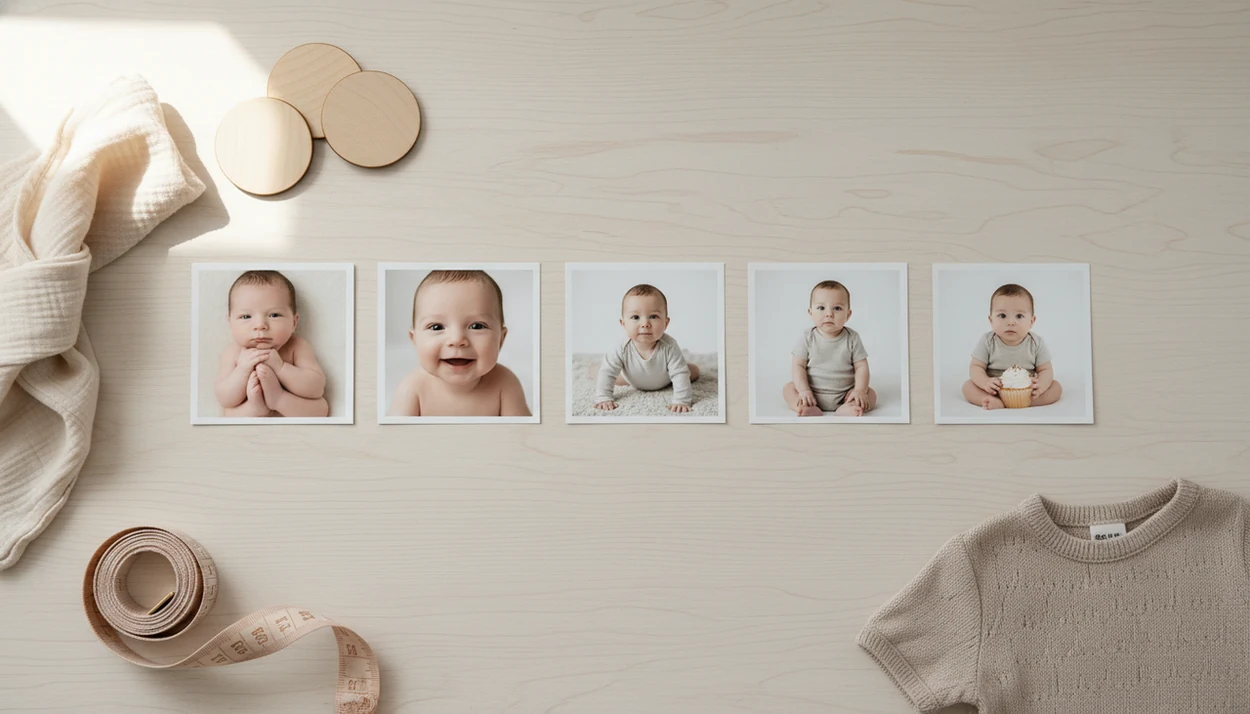
A baby milestone photo timeline is easiest to plan around five anchor stages: newborn, early smiles, tummy time, sitter portraits, and first birthday photos. Use monthly photos if you want a full baby photo calendar, or choose 3 to 5 key sessions if you want a simpler first-year story.
Definition: A baby milestone photo timeline is a month-by-month photography plan for capturing a baby’s first-year changes, expressions, movement stages, and birthday-ready portraits.
TL;DR
- Plan newborn photos in the first 2 to 3 weeks when possible, but do not treat one exact day as mandatory.
- Use 6 to 9 months for sitter photos because many babies are sitting steadily but not yet constantly crawling.
- Schedule first birthday photos around 11 to 12 months, especially if you need images for invitations, prints, or contest entries.
Baby Milestone Photo Timeline at a Glance
The fastest milestone plan is newborn photos in the first 2 to 3 weeks, expression photos around 2 months, tummy-time photos around 4 months, sitter portraits from 6 to 9 months, and birthday photos around 11 to 12 months. This is a photography planning tool, not a medical development chart.
At home, we like soft gray light from a bedroom window around 10 a.m. and a plain white crib sheet for the repeat shot. It keeps the baby’s face, size, and posture easy to compare.
For most families, these stages are easier than chasing a perfect photo every 30 days because each session has a clear visual purpose. Newborn and baby photo contest ideas, photography tips, milestone shoots, and ai newborn photo inspiration should deliver safer planning and clearer choices, not pressure to recreate someone else’s gallery.
How a Baby Milestone Photo Timeline Works
A baby milestone photo timeline works by organizing visible changes that show up on camera, not by measuring medical development. It turns the first year into flexible photo windows so caregivers can plan safer, calmer sessions around what the baby is actually doing.
Each anchor stage has a visual job. Newborn photos capture small scale, sleepy details, curled hands, and parent connection. Early-smile photos focus on eye contact and expression. Tummy-time images show a stronger neck, lifted chest, and effort on a firm surface. Sitter portraits work because posture, hands, and face are easier to frame before constant movement takes over. Birthday photos collect personality, gestures, outfits, and family context.
Windows work better than exact calendar dates because babies have tired days, growth spurts, appointments, and moods that change the photo. The planning mechanism is simple: choose safe positioning, soft light, and repeatable framing, then adjust the session around the baby’s comfort. A five-minute happy window beats a perfect setup with a fussy baby.
Monthly Milestone Timeline for First-Year Baby Photos
A monthly milestone timeline works by matching photo sessions to visible first-year changes, not by forcing rigid calendar perfection.
Newborn sleepiness, early smiles, tummy strength, sitting, crawling, standing, and birthday expressions all create strong photo moments because they look different on camera. By 2 months, many babies begin smiling, cooing, and holding eye contact. By 4 months, tummy-time pushups often photograph well. Around 6 to 9 months, sitting may give you calmer portraits before crawling takes over the room. For developmental context, the CDC lists social smiling around 2 months, improved head control around 4 months, and sitting-related milestones later in infancy: https://www.cdc.gov/ncbddd/actearly/milestones/index.html.
You can use a monthly baby photo calendar or choose fewer anchor sessions. If you want more prompts, our monthly baby milestone photo ideas guide breaks out simple themes.
Contest-ready planning benefits from consistent lighting, simple setups, and clear facial expressions. Tools like Newborn Photo App can help parents plan, edit, and share contest-ready newborn photos after the safe setup and original image are already in place.
6 Steps to Use a Baby Photo Calendar for First-Year Milestone Photos
Use a baby photo calendar by choosing the outcome first, then marking flexible windows for each major stage. The calendar should serve the baby’s mood and safety, not the other way around.
- Set the goal: Choose monthly photos, 3 to 5 key shoots, birthday prints, or contest entries.
- Choose one setup: Use safe positioning, natural window light, minimal props, and a simple backdrop.
- Mark likely windows: Add newborn, 2 months, 4 months, 6 to 9 months, and 11 to 12 months.
- Capture safe variations: Photograph the face, full body, hands, feet, and caregiver interaction.
- Review favorites monthly: Label selects so the first-year story is easy to assemble later.
- Save the strongest image: Use it for calendars, invitations, wall art, or contest submission.
A phone held just above mattress height often works better than standing over the baby. Less distortion. Fewer odd shadows.
For families building collages later, a free baby milestone collage app can help organize finished monthly selects.
Month-by-Month Baby Milestone Photo Timeline
A month-by-month baby milestone photo timeline gives each age a flexible photo goal. Use this as a planning map, not a test.
| Month | Photo focus | Practical setup idea |
|---|---|---|
| 1 | Newborn details, swaddles, parent hands, sleepy closeups | Wrinkled muslin swaddle on a bed, caregiver within arm’s reach |
| 2 | Smiles, coos, eye contact | Simple blanket setup near a window |
| 3 | Alert expressions, hands, favorite toy, tummy-time attempts | Low floor angle with a soft toy nearby |
| 4 | Tummy-time pushups and stronger head control | Firm floor mat, short supervised bursts |
| 5 | Reaching, grabbing, rolling preparation | Toy just within reach |
| 6 | Supported sitting, rolling, toy passing | Caregiver support cropped safely |
| 7 | Sitting practice, giggles, personality shots | Repeated chair or floor spot |
| 8 | Unaided sitting and floor-level portraits | Plain backdrop, no raised surface |
| 9 | Crawling or pre-crawling movement | Safe action photos on the floor |
| 10 | Standing support, clapping, interaction | Sofa-edge support with supervision |
| 11 | Birthday preview and invitation images | Outfit test before the party |
| 12 | First birthday, gestures, cake smash alternatives, family portrait | Banner, fruit, book, or family cuddle |
For month-specific starts, try one month baby photo ideas.
5 First-Year Milestone Photos Parents Should Prioritize
If you only take a few first year milestone photos, prioritize the sessions that show the clearest visual changes. These five usually tell the year well without making every month feel like production day.
- Newborn session: Aim for the first 2 to 3 weeks when possible, with safe, sleepy closeups.
- 2-month expression session: Capture smiles, coos, eye contact, and small face changes.
- 4-month tummy-time session: Photograph head control and supervised pushups on a firm surface.
- 6 to 9-month sitter session: Choose the window when sitting is steady but movement is still manageable.
- 11 to 12-month birthday session: Take portraits early enough for invitations, prints, or contest-ready selects.
Never force a pose or prop a baby into an unsupported position. A sleepy fist near the cheek is charming because it is natural, not staged into place.
For safety, the American Academy of Pediatrics advises keeping sleep surfaces firm, flat, and free of loose bedding; use that same caution when setting up newborn photos at home: https://www.healthychildren.org/English/ages-stages/baby/sleep/Pages/A-Parents-Guide-to-Safe-Sleep.aspx.
Consistent Setups for Contest-Ready Baby Milestone Photos
Consistent setups make milestone photos easier to compare and easier to judge in calendars, collages, wall art, and photo contests. The goal is visual continuity without making the baby fit a rigid scene.
- Same base: Use one chair, blanket, crib sheet, floor spot, or neutral backdrop each month.
- Simple clothing: Choose outfits that keep attention on the baby’s face and growth.
- Safe props: Avoid baskets, high surfaces, loose fabric near the face, and unstable poses.
- Soft light: Photograph near a window and skip harsh direct flash.
- One repeat plus candids: Take the same comparison shot, then capture natural expressions.
A tiny name sign turned backward can ruin an otherwise strong contest-ready setup. Check the square crop preview before submitting. For parents comparing editing workflows, a best app for baby milestone collage guide can help after the photos are safely taken.
Common Baby Photo Calendar Mistakes
The most common baby photo calendar mistakes come from treating the timeline as a strict assignment instead of a flexible record. Babies do not perform on schedule, and the better image is often the calmer one.
Do not assume newborn photos must happen on one exact day. The first 2 to 3 weeks are a common planning window, but a relaxed 3-week session can still be meaningful.
Avoid forcing every month to look identical if the baby is tired, fussy, or newly mobile. The diaper sleeve in the corner of a test shot is fixable. An unsafe pose is not.
Do not wait until the exact birthday if you need images for invitations or decorations. Also, don’t plan sitter photos after crawling is constant if your goal is a quiet seated portrait. Milestone timing is not a medical judgment, and too many props can bury the expression you wanted.
Limitations
A baby milestone photo timeline can organize first-year photos, but it cannot tell you whether a child is developing normally. Use it as a photo plan, not a clinical checklist.
- Babies develop at different speeds, including premature babies and very fast-moving babies.
- Not every baby will sit, crawl, stand, wave, or point during the same month.
- Monthly photos can become repetitive or stressful if parents chase identical poses.
- AI tools can help organize, crop, or polish images, but they cannot replace a well-lit original photo.
- Professional photography may help with lighting and posing, but it is not required for a strong first-year record.
- Safety matters more than recreating a pose from Pinterest, Instagram, or a contest gallery.
- If a pose requires hidden support, compositing, or special training, skip it at home.
Apps such as Newborn Photo App, Canva, and babyphotoart.app can support planning and editing, but the caregiver still controls safety, rights, and permissions. Use NPC or any editing app only after you have a safe original image and permission from anyone shown. Editing can improve crop, brightness, and layout, but it should not make an unsafe setup look acceptable.
FAQ
When should newborn photos happen?
Newborn photos are commonly planned in the first 2 to 3 weeks after birth. That window often allows sleepy, simple poses, but flexibility is fine.
Is 3 weeks too old for newborn photos?
Three weeks is not too old for newborn photos. Expect more awake images, simpler posing, and more patience between shots.
When do monthly baby photos start?
Many families start monthly baby photos after newborn photos or around 1 to 2 months. Starting late is fine if the setup stays simple.
What is a sitter photo session?
A sitter photo session is a portrait session taken when a baby can sit safely and steadily. It should not involve unsupported balancing or raised surfaces.
When are sitter photos best?
Sitter photos are often planned from 6 to 9 months. The right timing depends on the baby’s stability and mobility.
When should first birthday photos be taken?
First birthday photos are often taken around 11 to 12 months. Schedule them a few weeks before the party if you need invitations, prints, or decorations.
Do I need monthly milestone photos?
Monthly milestone photos are optional. Many families get a strong first-year story from 3 to 5 key sessions.
How do I keep baby milestone photos consistent?
Use the same light source, background, simple outfit style, and repeated framing. Newborn Photo App and NPC can help organize selects, but the original setup matters most.