Social Media Baby Photo Contests: Rules, Voting And Safety
Social media baby photo contests are online baby photo competitions where parents enter by posting a photo, using a contest hashtag, tagging a host, meeting a deadline, and often collecting likes or votes. The safest way to join is to read the rules, limit identifying details, choose a reputable host, and use contest-ready photos that do not expose private family information.
Definition: A social media baby photo contest is a platform-based competition that asks a parent or legal guardian to submit a baby photo through a public post, hashtag, tag, form, or voting page under published contest rules.
TL;DR
- Most contests use either public voting, judge-based selection, or a mix of both.
- Contest terms may give the organizer permission to reuse your baby’s image in marketing.
- Parents can reduce risk by limiting names, locations, dates, metadata, and face-forward public images.
Social Media Baby Photo Contests At A Glance
Social media baby photo contests are public or semi-public competitions where a baby photo is entered through a post, hashtag, tag, upload form, or voting page. They can be fun, but every entry adds to a child’s digital footprint.
A typical Instagram baby photo contest asks for a public profile, a required hashtag, a host tag, a caption, and a deadline. Winners may be chosen by likes, comments, shares, judges, or a finalist round. Prizes range from gift cards to baby products or photo sessions.
| Check first | What it means | Safer choice |
|---|---|---|
| Entry method | Hashtag, tag, form, or voting link | Use the least public option allowed |
| Selection method | Votes, judges, or both | Prefer clear judging rules |
| Privacy risk | Photo may be copied or reused | Avoid names, dates, and locations |
| Prize terms | Eligibility and fulfillment details | Save rules before posting |
The pocket check is real.
Before You Start: What You Need To Enter Safely
Before you open the social app, make sure you have the right to enter, understand the rules, and know what your family is comfortable sharing. A few minutes of preparation can prevent a rushed post from becoming a permanent public breadcrumb.
- Confirm you are the parent or legal guardian who can give consent for the child’s photo to be submitted. If another relative took the picture or wants to enter it, pause until permission and ownership are clear.
- Save the official rules, deadline, eligibility terms, prize details, and host account name before posting. Screenshots help if a caption, voting link, or prize promise changes later.
- Choose an original photo you own and read the license terms so you know whether the host can reuse it in ads, galleries, emails, or future promotions.
- Decide whether public voting fits your family’s comfort level. Likes and shares may bring more eyes to the entry than a judge-only contest.
- Prepare a non-identifying caption before upload. Skip full names, exact dates, location clues, daycare references, and anything visible in the frame that says more than you intended.
5 Facts About Hashtag Baby Contest Entries
Before entering a hashtag baby contest, parents should understand how visibility, consent, rights, and privacy work together. A cute entry can still be a careful entry.
- Fact 1: Baby contests usually use public voting, judge-based scoring, or both. Likes can help, but some hosts only count approved votes or finalist judges.
- Fact 2: Parent or legal guardian consent is usually required. A grandparent’s favorite crib photo may not be eligible without permission.
- Fact 3: Contest terms may grant image reuse rights to the host. That can include social posts, emails, ads, and future promotion pages.
- Fact 4: Public baby photos can be copied, scraped, reshared, indexed, or transformed. A 2010 AVG survey reported that 92% of U.S. children under age two already had an online presence source, and Pew Research Center found that 75% of U.S. parents said technology companies have a major responsibility to protect children's online privacy source.
- Fact 5: Safer photo choices can still be contest-ready. A tiny hand gripping a wrap, a bonnet detail, or a toy beside a plain blanket can carry the theme without full identification.
How Social Media Baby Photo Contests Work
A social media baby photo contest works by turning a submitted baby photo into a trackable contest entry that can be found, displayed, voted on, moderated, and scored under published rules. The basic data flow is simple: a parent posts or uploads, the host verifies the entry, the platform displays it, and users vote or judges score.
On Instagram or Facebook, the host may track likes, comments, shares, reactions, hashtag feeds, tagged posts, or a separate voting page. Public voting rewards reach and engagement. Judge-based scoring usually considers theme fit, image clarity, expression, and rule compliance.
Algorithms may affect who sees the post first, so high engagement does not always mean the highest-quality photo. Common rules cover baby age range, residency, one entry per child, original photo ownership, deadline, and prize eligibility.
For parents, judge-based contests are often easier to evaluate than pure voting contests because the scoring method can be written into the official rules.
How To Use An Instagram Baby Photo Contest Safely
How do you enter an Instagram baby photo contest with less privacy risk? Use the contest rules as a checklist before you choose the photo, not after the caption is already written.
- Check the organizer, rules, eligibility, and prize details before posting. Look for a real website, sponsor name, contact method, and deadline.
- Review the image license, privacy policy, data sharing, and removal terms. Watch for broad marketing rights.
- Choose a safe newborn or baby photo without personal identifiers. A simple backdrop usually beats a busy nursery corner.
- Remove location tags, metadata, full names, birth dates, daycare names, and address clues. Zoom into the test shot for mail, badges, and signs.
- Post or submit exactly as required with the correct hashtag, tag, caption, and deadline. If wording matters, draft from trusted baby photo contest caption ideas.
- Monitor votes, comments, impersonation, and unauthorized reposts until the contest closes.
Screenshots save arguments later.
Step 1: Check Baby Photo Contest Rules And Host Legitimacy
Is this baby photo contest legit? A legitimate baby contest online should identify the host, publish official rules, explain the prize, list eligibility, and provide a real contact path.
Look for the organizer’s official account, website, rules page, sponsor disclosure, prize fulfillment details, and winner announcement plan. Eligibility rules should state baby age, location, relationship to the child, number of entries, and who must own the photo. We have seen parents pause because the tiny name sign in a test setup was turned backward, then realize the contest also required the child’s full name in the caption. That is worth reconsidering.
Scam signals include a vague prize, pressure to pay, unclear winner selection, fake voting links, suspicious DMs, copied brand accounts, and “support” accounts asking for login details. Searches for a legit baby photo contest often lead to mixed results, so verify the host outside the social app before entering.
Step 2: Read Image Rights In Baby Photo Voting Contest Terms
Baby photo voting contest terms often decide what happens to the image after the contest ends. Read the license, release, publicity rights, user-generated content rights, sublicensing language, and perpetual use clauses in plain terms: who can use the photo, where, for how long, and whether they can share it with partners.
For platform context, Instagram's Terms of Use say users grant Meta a license to host, use, distribute, modify, run, copy, publicly perform or display, translate, and create derivative works from shared content, subject to privacy and app settings source.
Check whether the host can reuse the photo in ads, email campaigns, social posts, partner promotions, press pages, or future contest galleries. “Perpetual” usually means the permission does not automatically expire. “Sublicense” can mean another company may receive rights through the host.
Removal requests matter too. A host may delete a gallery page but still keep archive copies, analytics records, backups, or materials already sent to third-party platforms. Parents often save screenshots of Instagram contest rules before they post, including the date and account name. That small habit helps if terms change mid-contest.
Step 3: Prepare Contest-Ready Newborn Photos Without Unsafe Poses
Contest-ready newborn photos should prioritize safe, supported, natural positioning over viral-looking poses. If a pose looks like the baby is holding up their own head, sitting unsupported, or balanced in a prop, assume a trained professional, spotter, or composite technique was involved.
Use soft gray light from a bedroom window around 10 a.m., a clean background, simple wraps, milestone details, hands, feet, and calm expressions. A wrinkled muslin swaddle on a plain white crib sheet can photograph beautifully if the phone is held just above mattress height. Keep a caregiver within arm’s reach.
Newborn photography tips, milestone shoots, baby photo contest ideas, and AI newborn photo inspiration should deliver safer creative planning, not pressure to stage a risky scene. Newborn Photo App (NPC) is a baby photo contest app that helps parents plan, edit, and share contest-ready newborn photos. Tools like NPC, Canva, and Baby Pics can help with themes, but AI inspiration should not replace supervision or create misleading privacy assumptions.
Step 4: Reduce Privacy Risks Before Posting A Hashtag Baby Contest Entry
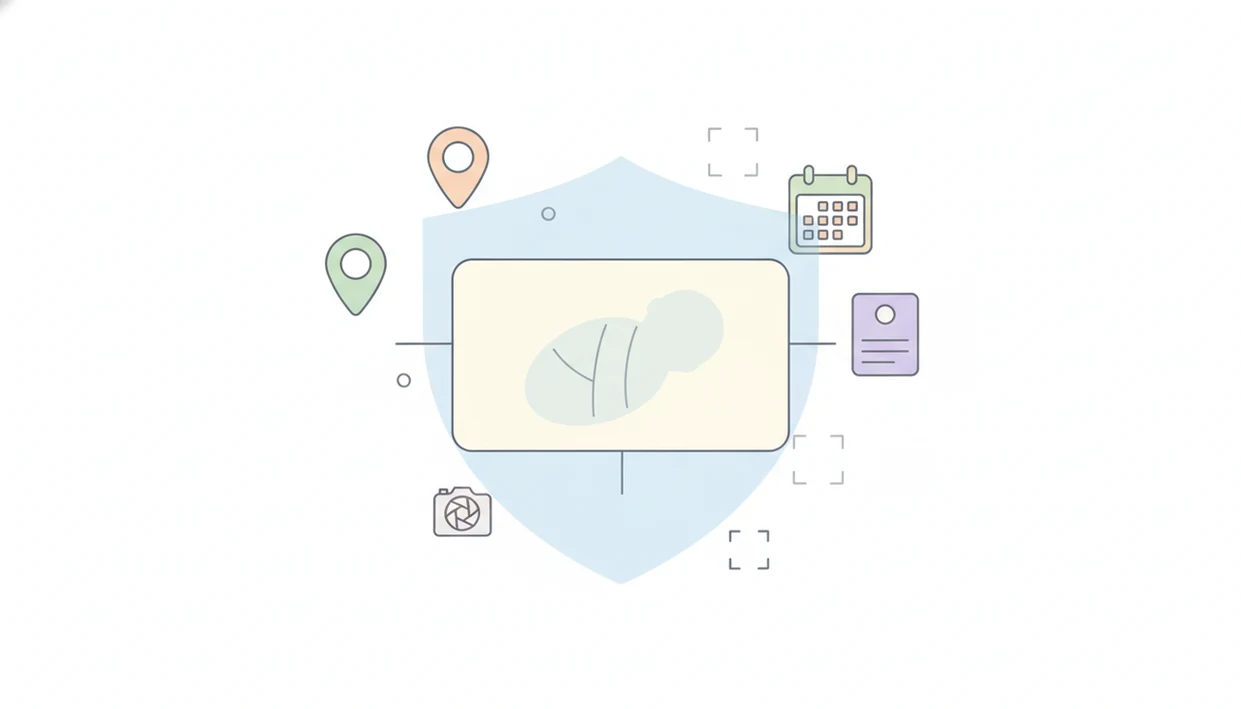
A hashtag baby contest entry is safer when the photo and caption reveal less about the child’s identity, location, and routine. Privacy starts in the frame, not just in the account settings.
Use partial profiles, turned-away faces, silhouettes, hands, feet, cropped details, or non-identifying milestone props. Avoid full names, exact birth dates, hospital bracelets, street signs, house numbers, school or daycare logos, geotags, and routine clues like “every Tuesday at music class.” A holiday onesie laid flat beside a rattle can show the theme without showing the baby’s face.
Emojis and stickers are not complete privacy protection. They can leave context, edges, metadata, or original copies behind. In a 2020 Australian study, 81% of parents reported posting photos or videos of their children online, and 58% posted at least monthly source. A 2018 Children's Commissioner report estimated that an average child had about 1,300 photos and videos posted online by age 13 source. For safer tagging, review baby photo contest hashtags before posting.
Step 5: Verify Votes, Winners And Contest Follow-Up
After submitting a baby photo voting contest entry, confirm that the entry appears correctly before you ask anyone to vote. Check the tag, hashtag, caption, voting link, deadline, and crop for the entry form.
Some contests count one vote per day. Others count likes, comments, shares, email votes, reaction buttons, or judge-selected finalist rounds. The awkward square crop box can cut off a bonnet or a grandparent’s hand, so preview the entry page on a phone before sharing it with family. If cropping is the issue, a tool to crop baby photo for contest can help you test the frame before submission.
Watch for bot-like voting, fake support accounts, paid vote schemes, phishing links, and DMs claiming your entry needs “verification.” Save winner announcements, prize messages, tax or eligibility requests, and removal contacts. Votes can create excitement, but they do not guarantee fair judging, safe sharing, or a trustworthy host.
Common Mistakes And Troubleshooting For Baby Contest Entries
Most baby contest entry problems come from visibility settings, formatting slips, or unclear host behavior. Troubleshoot from the public entry page first, then save evidence before you message the organizer.
- Check your account visibility and hashtag spelling if the entry is missing from a hashtag feed. A private profile, one wrong character, or an extra space can keep the host from finding the post.
- Preview the voting page on mobile before sharing the link. Phone layouts may crop differently than desktop, especially around bonnets, hands, signs, and props near the edge.
- Ignore fake verification DMs that ask for passwords, login codes, payment, or “support” links. Reply only through the host’s official contact path, and never share account access.
- Document vote-count issues with screenshots, timestamps, device notes, and the exact voting URL. Capture the before-and-after count if votes disappear or freeze.
- Request removal in writing if the host reposts your baby’s photo beyond the stated contest terms. Include the saved rules, post links, and the specific use you want taken down.
A calm paper trail usually helps more than a public argument.
Common Myths About Social Media Baby Photo Contests
Several common beliefs make social media baby photo contests feel lower-risk than they are. The safer reality is usually more practical and less dramatic.
- Myth: It is just for fun, so terms do not matter. Fun contests can still grant the host a broad license to reuse a baby’s image.
- Myth: Face stickers fully protect a baby’s identity. Stickers may hide features, but captions, props, metadata, and original copies can still identify a child.
- Myth: Only influencer children are at risk. Any public image can be downloaded, altered, scraped, or reposted.
- Myth: Deleting a post removes every copy. Screenshots, backups, shares, and host archives may remain.
- Myth: A private account always keeps a contest entry private. Some contests require public hashtags, public tags, or voting pages that move the photo beyond your usual audience.
A diaper sleeve in the corner of a test shot feels harmless. Sometimes it shows the store, neighborhood, or delivery label.
Limitations
Social media baby photo contests can be entered more carefully, but they cannot be made risk-free. Parents should treat each entry as a public digital decision, not only a cute post.
- Posting any baby photo online creates some digital footprint that cannot be fully controlled.
- Screenshots, downloads, resharing, backups, and platform archives may persist after deletion.
- Privacy settings, hashtag visibility, and platform policies can change without notice.
- There is limited long-term research on how children will feel about public baby contest entries later.
- Even legitimate contests can be poorly moderated or attract negative comments.
- AI tools may copy, transform, or learn from public images depending on platform and data practices.
- Photography quality and vote strategy cannot guarantee a win.
- A private family account may still expose an entry if rules require a public hashtag or external voting page.
If the entry feels too revealing, choose a different frame. A baby’s privacy is not a deadline problem.
FAQ
Are baby photo contests safe?
Baby photo contests can be entered more safely, but they are never risk-free. Public baby photos can be copied, reused, reshared, or kept after the contest ends.
How do hashtag contests work?
Hashtag contests ask parents to post a photo with a required hashtag, tag, caption, and deadline. The host uses those details to find, verify, judge, or display entries.
Do likes count as votes?
Some contests count likes, reactions, comments, or shares as votes. Others use judges, finalist rounds, or a separate voting page.
Can contests use my baby’s photo?
Many contest terms grant the host a license to reuse submitted photos. That use may include marketing, social posts, emails, or future contest pages.
Should I use my baby’s name?
Avoid full names in captions, tags, props, and visible objects. Also avoid exact birth dates, daycare names, hospital bracelets, and address clues.
Are Instagram baby contests legit?
Some Instagram baby contests are legitimate, and others are scams or copied accounts. Check the organizer identity, official rules, prize details, contact information, and warning signs before entering.
Can I delete a contest entry?
You can usually delete your own post or request removal from the host. Copies, screenshots, backups, voting pages, or licensed uses may remain.
What photos win baby contests?
Common winning qualities include clear light, expressive moments, simple backgrounds, safe posing, and a strong fit with the theme. A face-forward portrait is not the only possible contest-ready image.
Are voting contests fair?
Voting contests can favor large networks, platform reach, and engagement behavior. They do not always reward the safest, clearest, or most creative photo.