
Newborn Photoshoot Timeline for Calm At-Home Sessions
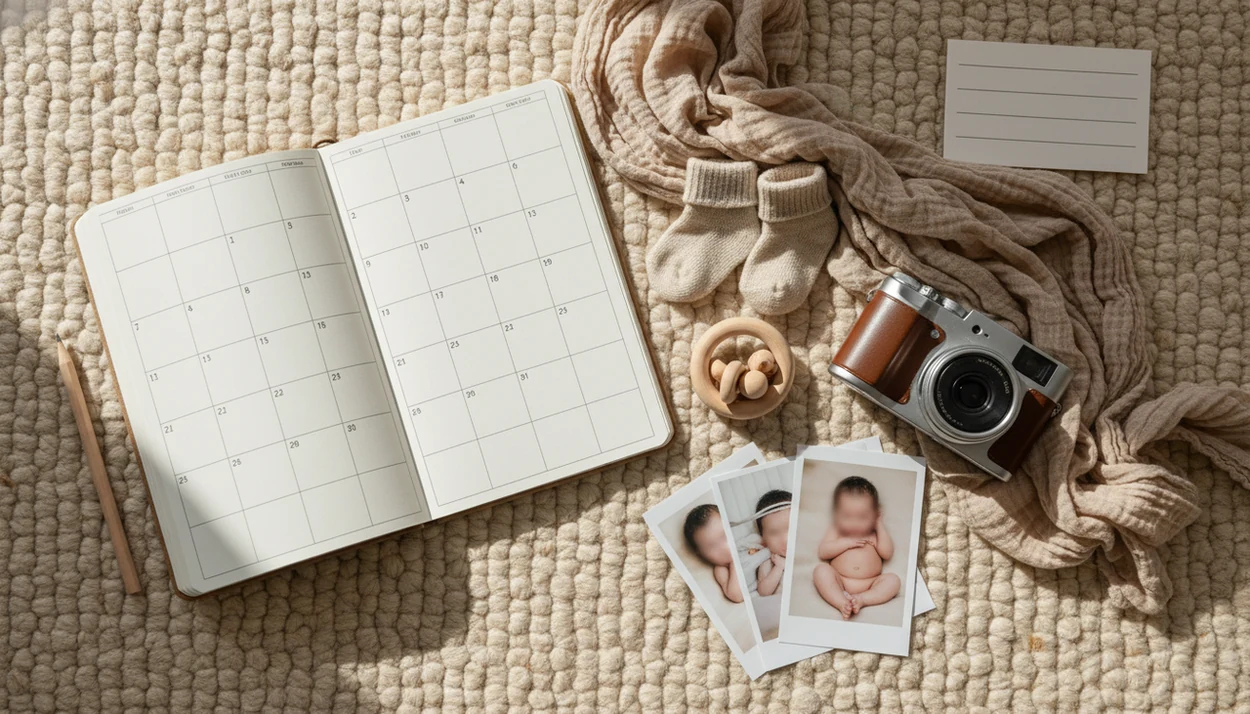
Plan the main at-home session for the first 5–14 days if you want sleepy posed images, or any time in the first 6–12 weeks for relaxed lifestyle photos. A practical newborn photoshoot timeline also includes planning during pregnancy, a 1.5–3 hour session-day buffer, editing time, and a final review before contest entry.
> Definition: A newborn photoshoot timeline is the planning schedule parents use to prepare, photograph, edit, select, and share newborn images from birth through early baby milestones.
TL;DR
- Book or plan the session during the second or early third trimester so the first two weeks after birth are not rushed.
- Use the 5–14 day window for curled posed photos, but choose 2–12 weeks for flexible at-home lifestyle images.
- Build in feeding, soothing, culling, editing, and contest-rule review before posting or entering photos.
Newborn Photoshoot Timeline at a Glance
A practical newborn photoshoot timeline starts before birth and ends after the final image review. Plan during the second or early third trimester, then adjust once the baby arrives.
Use this rough schedule:
- Second or early third trimester: choose posed, lifestyle, or contest-focused goals.
- Birth to day 3: recover, settle feeding, and confirm a rough session date.
- Days 5–14: use this window for sleepy posed newborn photo timing.
- Weeks 2–12: keep a flexible at-home photoshoot schedule for lifestyle images.
- After the session: cull, edit, create AI variations if desired, and check official rules before sharing.
The first test frame often shows what needs fixing. A pacifier clip in the corner. A blanket edge twisted. Better to notice that before the baby is dressed and sleepy.
For parents using a phone, the setup basics overlap with how to take newborn photos with phone, especially light, distance, and cropping.
How a Newborn Photoshoot Timeline Works
A newborn photoshoot timeline works by matching the baby’s age, sleep patterns, feeding needs, parent recovery, and available light to the photo style. Posed images depend more on early newborn flexibility, while lifestyle photos depend more on calm family moments.
The mechanism is simple: younger newborns often sleep in shorter cycles between frequent feeds, and their posture can still look curled from the womb. That affects “pose tolerance,” meaning how naturally a baby settles into a safe position. Lifestyle sessions are less strict because a yawn, parent-held cuddle, or crib-side moment can work at many ages.
Timing also depends on where birth and recovery happen. CDC/NCHS birth data show that U.S. deliveries are overwhelmingly hospital-based, so many families need a few days before they are home and ready (CDC/NCHS births data).
Contest preparation adds another layer: selection, gentle retouching, file-size checks, and deadline review. The square crop box waits for no one.
At-Home Photoshoot Schedule Preparation Checklist
Prepare the at-home photoshoot schedule before birth so session day feels slower and safer. The goal is not a packed shot list; it is a small, supervised setup that can flex around the baby.
Five preparation facts:
- Choose the photo goal first. Posed, lifestyle, and contest-focused images need different timing and patience.
- Find the light before the baby arrives. Soft gray light from a bedroom window around 10 a.m. is easier than harsh noon sun.
- Set aside simple materials. Use wraps, neutral blankets, backup outfits, and a clear surface.
- Remove unsafe ideas early. Avoid suspended poses, unsupported heads, unstable baskets, and complex composites without a trained professional.
- Plan the finish line. Tools like [Newborn Photo App]() can help parents plan, edit, and share contest-ready newborn photos after the session.
Safe newborn and baby photo contest ideas, photography tips, milestone shoots, and ai newborn photo inspiration should deliver clearer planning and safer choices, not pressure to copy impossible images.
Step 1: Book Newborn Photo Timing During Pregnancy
“When should I book newborn photos?” Plan or book newborn photo timing in the second trimester or early third trimester, then treat the due date as a placeholder. The real session date should be confirmed after birth.
Babies arrive early, late, and occasionally on the one day everyone thought was impossible. That is normal scheduling chaos, not a failed plan. If you are hiring a photographer, ask how they handle moving dates. If you are shooting at home, block a general week instead of one exact morning.
Preterm birth is a clear reason to adjust the ideal timeline. The CDC reports that about 1 in 10 babies in the United States is born preterm, so corrected age, medical guidance, feeding, and recovery may matter more than the standard 5–14 day window (CDC preterm birth).
Keep one note on your phone with date ideas, prop limits, and the room you want to use. Tiny planning. Big relief.
Step 2: Choose Posed or Lifestyle Newborn Photo Timing
Posed newborn photos usually work best around days 5–14, while lifestyle newborn photos can work through roughly 6–12 weeks. Missing the first two weeks does not mean you missed newborn photos.
| Session style | Common timing | Session feel | Contest use |
|---|---|---|---|
| Posed newborn photos | About 5–14 days | Sleepy, curled, carefully supported | Good for simple wrapped portraits and classic baby images |
| Lifestyle newborn photos | First weeks through 6–12 weeks | Parent-held, crib-side, feeding breaks nearby | Good for emotional family images and natural storytelling |
| Older newborn images | After 3–4 weeks | More alert, more stretching, less curling | Good for eye contact, expressions, and milestone-style entries |
After 3–4 weeks, many babies are more awake and less suited to curled poses. That can actually help lifestyle images. A parent palm supporting the head, a plain white crib sheet, and one quiet look toward the window can be stronger than a complicated setup.
For repeatable later sessions, monthly baby milestone photo ideas can extend the baby photo timeline beyond the newborn stage.
Step 3: Build a Calm At-Home Photoshoot Schedule
A calm at-home photoshoot schedule should allow 1.5–3 hours, even if the camera is only active for a small part of that time. Feeding, burping, soothing, diaper changes, and parent rest are part of the session, not interruptions.
CDC breastfeeding surveillance shows that most U.S. infants start out receiving some breast milk, which is why early feeding rhythm can shape the whole session (CDC Breastfeeding Report Card). Some babies settle after a feed; others need a pause, a burp, and a reset before the first frame.
Numbered session-day steps
- Set the room before dressing the baby, including temperature, window light, and the simple backdrop.
- Feed and burp before the first shot, but expect short pauses.
- Start with wrapped or parent-held images before trying detail shots or outfit changes.
- Keep the session window open for 1.5–3 hours instead of forcing a 30-minute shoot.
- Pause when needed for diapers, soothing, feeding, and parent rest.
- Review one test frame for clutter, focus, and safe positioning.
The burp cloth always sneaks in somewhere.
Step 4: Edit and Cull the Baby Photo Timeline
The editing stage should turn a full camera roll into a small, safe, polished set. Cull first for expression, focus, light, safe positioning, and emotional clarity before you touch sliders.
Remove near-duplicates early. If five photos show the same wrapped pose, keep the one with the softest expression and cleanest focus. Then make gentle edits: exposure, white balance, crop, and temporary newborn skin marks. Avoid over-smoothing the baby’s face or using unrealistic AI edits that make the pose look unsupported, unsafe, or unlike the child.
A before-after screen split can be useful, but it should still look like the same baby in the same room. For many parents, the plain edit wins because it keeps the eyelashes, cheek texture, and small hand position believable.
Create two shortlists: one for family sharing and one for contest entries. Different job. Different crop.
Step 5: Review Contest Entries Before Sharing Newborn Photos
Review contest entries after editing, not during the emotional high of the session. Check age brackets, file size, format, editing rules, caption limits, deadlines, and any platform policy before posting.
Choose photos where the baby is clear, safely positioned, and not overwhelmed by props. A tiny name sign turned backward can ruin an otherwise sweet contest-ready setup if the rules require readable details. So can the awkward square crop box that cuts off a bonnet or a grandparent’s hand.
Prepare captions, dates, rights and permissions, and parent-approved sharing settings before upload. Leave time for one final review on a different screen, because phone brightness can hide color casts and focus misses.
Apps such as Newborn Photo App for iPhone can support planning, editing, and sharing contest-ready newborn photos, but official rules still decide what can be entered.
Common Newborn Photoshoot Timeline Mistakes
Most newborn photoshoot timeline mistakes come from treating the session like a fixed appointment instead of a flexible family plan. Build buffers for birth timing, feeding, recovery, editing, and contest rules.
Five common mistakes:
- Using the due date as the final shoot date. The date should shift after birth.
- Assuming days 7–10 are the only chance. Lifestyle photos can work much later.
- Expecting a full gallery in 30 minutes. A realistic at-home session often needs 1.5–3 hours.
- Trying advanced poses without training. Unsupported heads and complex composites are not DIY shortcuts.
- Forgetting the post-session timeline. Editing, file preparation, and deadline checks can take longer than expected.
Parent recovery matters too. So do feeding, preterm birth, mood, and plain exhaustion. CDC data show that about 1 in 8 women with a recent live birth report symptoms of postpartum depression, which can make an early session feel heavy rather than joyful (CDC postpartum depression).
If the day falls apart, use the safe crib photo. Reset tomorrow.
Evidence and Safety Sources for Newborn Photo Timing
Evidence for newborn photo timing is mixed: health guidance should come from medical and safety sources, while the 5–14 day photo window is a photography convention. Treat that early window as a creative preference, not a medical deadline.
Use sources in the right lane:
- Check CDC guidance for claims about preterm birth, early feeding patterns, and postpartum recovery, especially when birth was early or recovery is not simple.
- Follow AAP safe-sleep guidance when judging setups, props, and positioning; unsupported heads, unstable baskets, soft loose surfaces, and sleepy-looking composites should not override infant safety.
- Ask a clinician before planning around corrected age, NICU discharge, breathing concerns, feeding issues, jaundice, recovery complications, or parent mental health.
- Hire or consult a trained newborn photographer for any pose that needs hand support, compositing, or precise baby handling.
- Separate contest prep from health advice: cropping, captions, file size, and deadline choices can wait, but feeding, warmth, breathing, and safe positioning cannot.
If the safest photo is a simple parent-held frame near the window, that is the timeline working.
Limitations
Newborn photo timing rules are helpful, but they are not medical or safety guarantees. A calm, age-appropriate pose matters more than hitting one exact day on the calendar.
Key limitations:
- The 5–14 day posed-photo window is a guideline, not a rule.
- There is no medical evidence that one exact day creates better newborn photos.
- Preterm birth, NICU time, complications, and parent recovery can override photo timing.
- Postpartum depression symptoms can make early sessions unrealistic or emotionally heavy.
- After 3–4 weeks, some curled poses may not be safe or achievable.
- AI newborn inspiration can create unrealistic expectations about safe posing, support, and baby proportions.
- Contest rules vary by age bracket, image edits, deadlines, file size, and rights.
- A caregiver should stay within arm’s reach during at-home photos, even for simple setups.
For parents building their own setup, how to take newborn photos at home covers more safety-first framing, light, and backdrop choices. NPC can help organize ideas, but it cannot replace clinician advice, a trained newborn photographer, or contest-specific rules.
FAQ
When should newborn photos be taken?
Posed newborn photos are commonly planned for about 5–14 days after birth. Lifestyle newborn photos are more flexible and can often be taken from the first weeks through roughly 6–12 weeks.
Is one month too late for newborn photos?
One month is not too late for lifestyle newborn photos. It may be late for some curled posed images because many babies are more alert and less flexible by then.
How long do newborn photos take at home?
At-home newborn photos commonly need 1.5–3 hours. The extra time allows for feeding, soothing, diaper changes, and parent breaks.
When should I book newborn photos?
Book or plan newborn photos during the second trimester or early third trimester. Use the due date as a placeholder and confirm the actual session date after birth.
What time of day is best for newborn photos?
The best time is the brightest calm window-light period that fits the baby’s feeding and sleep rhythm. Many homes photograph well in soft morning light before direct sun becomes harsh.
Can I photograph a preterm baby?
Yes, but timing should be adjusted around medical guidance, recovery, feeding, and baby readiness. The standard newborn photo window may not apply after preterm birth or NICU time.
What is a lifestyle newborn session?
A lifestyle newborn session is a relaxed at-home photo session focused on family connection and natural moments. It usually uses parent-held images, crib scenes, nursery details, and simple window light.
How do I choose contest photos?
Choose clear, safe, emotionally strong newborn photos that meet the contest age, file, format, and editing rules. Newborn Photo App can help organize a shortlist, but the official contest rules control eligibility.