
Newborn photo ideas for every style
By the Newborn Photo App team · Updated
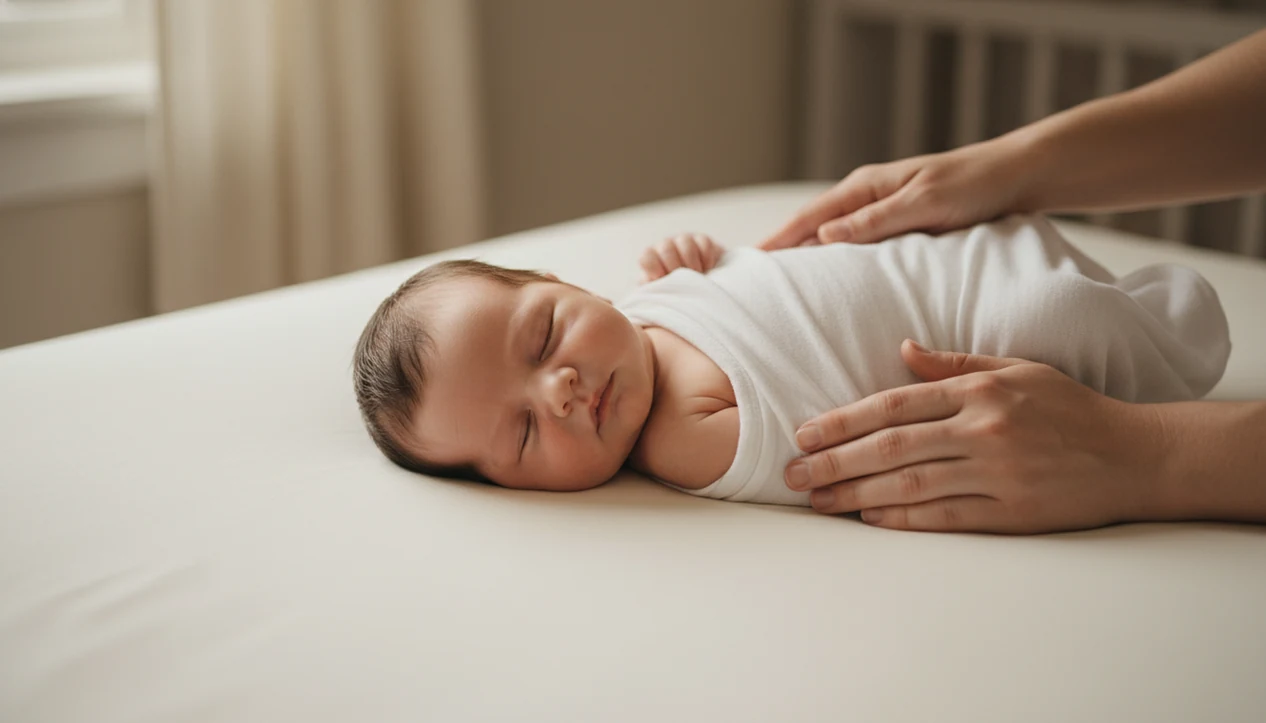
The best newborn photo ideas are simple ones you can do at home in an hour, such as a swaddled sleeper, close-ups of tiny hands and feet, a parent's hand cradling a foot, and quiet lifestyle moments in bed or in your arms. Pick two or three styles that suit your baby and your home, and skip anything that needs a prop to hold the baby up. Safe and simple almost always looks better anyway.
This page is a menu. Each section gives you one style, what it looks like, how to set it up and what to watch for. Where a style has its own guide, we link to it. If you are brand new, start with our overview of newborn photography, then come back and choose.
How to choose ideas that fit your baby
Ideas do not matter if the baby will not cooperate, so choose by temperament first.
- A sleepy baby suits swaddled shots, detail close-ups and sleeping portraits.
- An alert, wakeful baby suits lifestyle shots, eye contact and parent interaction.
- A fussy baby suits skin to skin, shoulder holds and anything where you are already comforting them.
Then think about the room. A bedroom with one big window gives you a bed, a chair and a corner, which is plenty. A bright kitchen is tempting, but counters are no place for a baby. Work with a bed or floor and the best window you have.
Swaddled and wrapped portraits
The classic. A baby wrapped in a soft, stretchy fabric, asleep on the back, face turned slightly toward the light. It works because the wrap hides the awkward arm movements and gives a clean, calm shape.
- Use a plain, solid color in cream, gray, sage, dusty rose or soft blue. Patterns pull focus from the face.
- Shoot from above at a slight angle, and again from the side at the baby's level.
- Keep the wrap loose at the chest and hips, snug only around the arms. The face and neck stay completely clear.
A safety note that is easy to miss. The American Academy of Pediatrics says swaddling is only for a sleeping baby placed on the back, and it should stop once the baby shows signs of rolling, often around three months. So wrapped portraits belong to the very early weeks, and the wrap comes off as soon as the pictures are done. Never wrap a baby tightly around the hips, and never prop a wrapped baby on the side or tummy.
Details and macro close-ups
If you only try one idea, try this. Newborn details change in weeks, and they are the pictures parents treasure most.
- Toes curled together, with the soles facing the camera.
- A fist the size of a walnut, with fingernails and creases visible.
- Eyelashes against the cheek while the baby sleeps.
- The curve of an ear, a head of fuzz, the dent above the lip.
- Both feet resting in an adult palm.
Use your phone's macro mode or step back and zoom in rather than pushing the lens to the skin. Hold still, tap on the closest edge to focus, and shoot a short burst. Light matters more here, so a window to one side and a white sheet or card on the other side to soften shadows is plenty. More on that in our newborn photography lighting guide.
Parent hands and family frames
Hands are the easiest way to show scale. A newborn's whole foot can fit in one fingertip-to-thumb curl, and a tiny hand can wrap around a single finger.
- A mother's or father's hand cupped under the baby's feet.
- Two hands forming a heart or a loose circle around the baby's head, with the baby resting on a firm surface.
- A sibling's hand placed gently next to the baby's.
- A grandparent's hand over the baby's hand, a lovely image across generations.
The hands in these pictures are real, because they are really holding the baby. Nothing is hidden. We have a full set of variations in newborn photo ideas with parents' hands. For households with more than one baby, see twins newborn photo ideas, which cover how to keep two babies safe and visible at once.
Siblings and older kids
A toddler and a newborn together is a team effort, and the toddler is the harder part. Keep it short.
- Seat the older child on a couch or bed, and place the baby in an adult's arms across the child's lap, with an adult's hands under the baby the entire time.
- Ask the older child to kiss the head, touch a foot or look at the baby. Ask for one thing at a time.
- Take the picture on the third or fourth try. The first is usually stiff.
- Never put a baby in a toddler's arms unassisted for a photo, however sweet it looks.
Bribes are fair. A snack waiting at the end makes a toddler a better assistant than any amount of begging.
Lifestyle shots in bed or in arms
Lifestyle photos show what newborn life actually looks like, and they work at any age during the early weeks, including after the sleepy stage ends. They also need no setup.
- Parent and baby asleep side by side, shot from above or at eye level.
- A feeding moment, photographed discreetly from behind or from the side.
- Baby against a shoulder, looking over it toward the window.
- Skin to skin on a chest, with the parent awake and aware. The baby's nose and mouth stay uncovered, and both adults' hands are free to steady the baby.
- A cluttered nursery shelf with a tiny sock in the foreground.
Skip the idea of photographing a baby sleeping with you on a sofa or bed. If you are drowsy, put the baby in a crib or bassinet and take the picture of the room instead. Many hospitals offer first pictures too, and our hospital newborn photo ideas page covers what to shoot before you leave.
Black and white
Black and white is a rescue and a style. Red, blotchy or peeling skin, a yellow cast from room lights and a messy background all become less noticeable once color is gone.
- Shoot in color and convert later, so you can still change your mind.
- Choose images with strong shapes, like a curled hand or the outline of a cheek, and watch contrast. A flat gray picture means the light was too dim or too even.
- Details and parent hands convert best, and posed full-body shots convert worst.
Boy, girl or neutral ideas
Babies do not need a gender code. Neutral palettes photograph best and age well in an album.
- Cream, oatmeal, soft gray and sage suit everyone and never clash with skin tones.
- Add a small accent through a knit hat, a headband or a bow only if it stays comfortably loose and off the face.
- A plain backdrop and a simple outfit let the baby be the picture. Choose fabrics that are soft, breathable and easy to slip off, and check that nothing is tight around the neck, wrists or ankles.
If you love a theme, such as seasonal colors, seasonal newborn photo themes show how to do it without crowding the baby.
Ideas to skip
Some pictures on social media look dreamy because a professional shot them from several frames. Most are not reasonable for home use.
- A baby hanging from a branch, a sling, a hook or a hammock.
- Head-in-hands, froggy and chin-on-hands poses without help from someone trained in composites.
- A baby in a bowl, crate or basket, with no adult touching. Baskets and bowls can tip, and the AAP says nothing soft belongs near a baby, with no exception for photo props.
- Any pose with a loose blanket, pillow or plush toy touching the baby's face.
- Photos on a high surface where the adult is a step away.
When in doubt, ask whether the picture could still be taken with a hand on the baby, and if not, drop it. A good rule is to keep every pose low, flat and close to your hands. Anything higher than a mattress is a risk you do not need.
One more thing about style. Trends in newborn photography change every year, but the images people keep on the wall are almost never the trendy ones. They are the ones where the baby looks like the baby, with a scrunched nose, a milk bubble or a hand that does not quite open. Leave a few of those in, and do not edit every trace of newborn life away.
Pick three and go
A good first session is one swaddled shot, a handful of detail close-ups and one lifestyle moment. That is enough for an album page and a few prints. You can repeat the same ideas a few weeks later and the baby will look completely different, which is the whole point.
Take your time, keep the baby warm, keep a hand on the baby, and stop if your baby is not into it. If your baby seems unwell, feverish or unusually sleepy, put the camera away and call your pediatrician.
Want a candid, documentary feel instead of styled setups? Read about lifestyle newborn photography. For group shots, see our newborn family photoshoot plan and the guide to newborn sibling photos.
Newborn photo app: join the waitlist
Stickers, frames and posing guides for newborn photos are in the works. Leave your email and we will send one message when the app launches. No spam.
Frequently asked questions
What are the easiest newborn photo ideas for beginners?
Start with close-ups of hands, feet and eyelashes, a swaddled sleeper on the back near a window, and a parent's hand around a tiny foot. None needs props, and all can be shot with a phone. Pick one or two, keep the background plain, and let the baby set the pace.
How do I get my newborn to stay still for photos?
You mostly cannot, so plan for movement. Photograph after a feed when the baby is drowsy, keep the room warm and use soft white noise. Shoot bursts and pick the best frame later. If the baby squirms, switch to details or a shoulder hold, which work even when the baby is awake.
What are good newborn photo ideas for a boy or a girl?
The same ideas work for both. Neutral colors like cream, sage, gray and soft blue photograph beautifully and avoid stereotypes. Choose a simple outfit, a plain background and quiet details. If you want an accent, a loose knit hat or a soft headband is enough, kept clear of the face.
Can I take newborn photos without props?
Yes, and many of the best newborn pictures use none. Hands, a clean sheet, a window and the baby's own details carry the whole image. Props mostly add risk and clutter. If you want one, choose something small, washable and placed beside the baby, never on or under the baby.
What newborn photo ideas work when my baby is awake?
Awake babies suit lifestyle shots. Try the baby on a shoulder looking toward a window, face to face with a parent, gripping a finger, or in arms at a window. Go for eye contact and expression instead of a posed look, and shoot in short bursts because awake moments pass quickly.