Newborn photo props: safe choices and what to skip
By the Newborn Photo App team · Updated
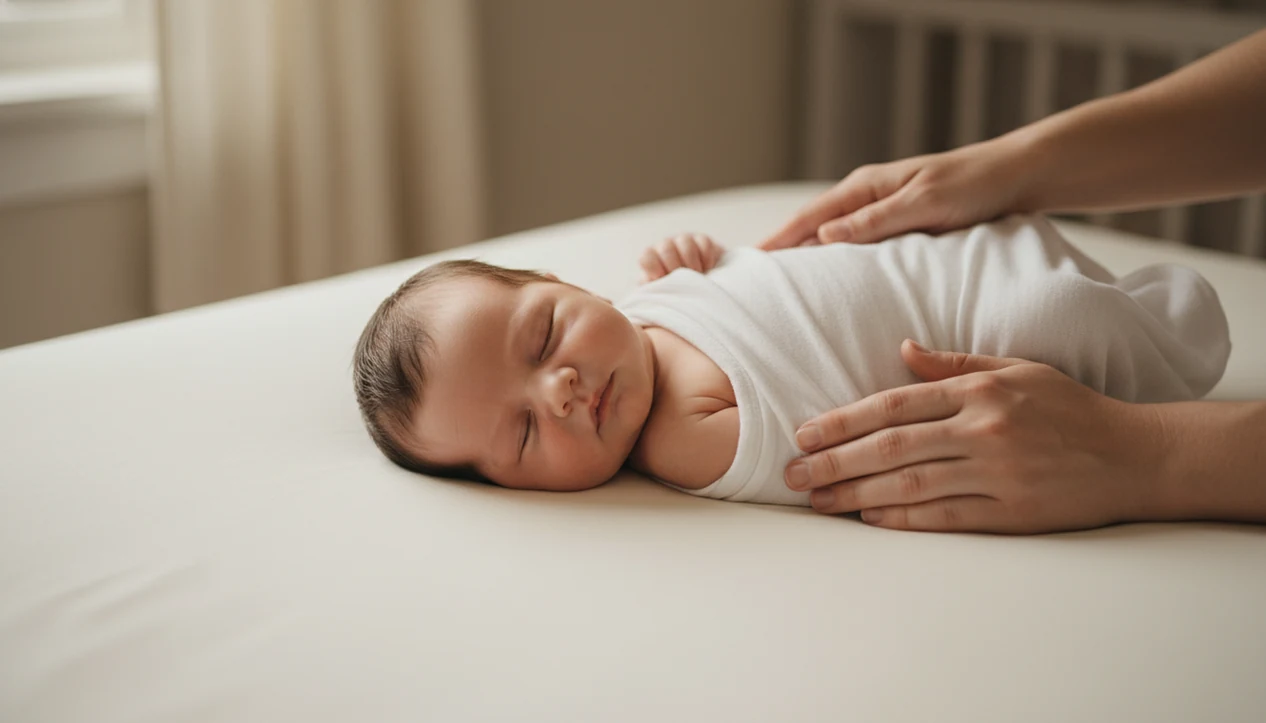
The safest newborn photo props are small, washable items placed beside the baby, such as a knit hat, a plain wrap for a sleeping baby on the back, or a parent's hand. Anything soft that sits under, over or around the baby's face, including pillows, bean bags, fluffy blankets and stuffed animals, is risky, and the American Academy of Pediatrics has not carved out an exception for photos. If a prop is not needed, leave it out.
Props are the part of newborn photography that looks the most fun and carries the most risk. This page sorts them into safe, careful and skip, tells you what is worth buying, and covers a safer alternative that is coming to our newborn photo app. For the wider approach, see our guides to newborn photography.
The rule that decides everything
The AAP's safe sleep advice for infants is simple. A baby sleeps on the back, on a firm, flat surface, with a fitted sheet and nothing else in the space. No pillows, no quilts, no loose bedding, no soft objects. The guidance does not make an exception for photo props.
A photo is not sleep time. Most of a session is an awake or briefly sleeping baby with an adult right there. But the same hazards apply. A soft object near a newborn's face can block the nose and mouth, and a newborn cannot lift or turn their head away reliably. So the practical rule is to treat props like sleep gear. If you would not put it in a crib, think hard before putting it near the baby.
Two more rules sit on top of this one.
- An adult keeps a hand on or within reach of the baby at all times, with no exceptions for baskets, beds or chairs.
- The baby is never left alone with a prop, not even for a moment while you fix the camera.
Props that are generally fine
These do not touch the face, do not hold the baby's weight and are easy to take away.
- A parent's or sibling's hands. The best prop there is. It is warm, free and clearly supervised.
- A snug-fitting knit hat or soft cap. Check that it does not slip over the eyes or nose, and take it off once the baby is warm.
- A plain wrap for a sleeping baby placed on the back. Swaddling is only for sleep, and it should stop once the baby shows signs of rolling, often around three months. Keep the wrap clear of the face and not tight around the hips.
- A fitted sheet over a firm surface. A backdrop that is also the safest surface.
- A small, lightweight item placed next to the baby. A tiny shoe, a name card or a sprig of greenery set a few inches away, never touching.
Props to use only with care
These can work if an adult is touching the baby throughout, but they take more thought, and many families are better off skipping them.
- Baskets and bowls. A baby is often not actually sitting in the bowl in professional pictures. The baby lies on a stable surface and the bowl is placed around them. If you try this, make sure the container cannot tip, the baby's weight is not on the prop and an adult holds on throughout. Never leave a baby in a container, even for a second.
- Headbands and bows. Choose a soft, stretchy band that sits loosely and comes off after a few frames. Check the skin for marks. Tight elastic can leave a red line and may slip over the eyes.
- Outfits with buttons, snaps or bows. Anything that can come off is a choking risk. Our page on newborn photoshoot outfits covers what to choose.
- Thin, light fabrics near the face. Muslin, tulle and gauze can cling to a baby's nose and mouth. Skip them for a baby lying on the back.
- Heat sources. Heating pads and hot water bottles near a baby can burn or overheat. Warm the room instead.
Props to skip
- Pillows, bean bags and posing cushions under or around the baby.
- Stuffed toys and plush animals, especially near the head.
- Hanging props, such as hooks, swings and hammocks that hold the baby suspended.
- Any prop that is unstable, raised, or holds the baby upright without a hand.
- Real flowers, candles, essential oils, pets and anything with loose, small or sharp parts.
- Anything that covers the face, even a decorative cloth.
The viral poses that use these props are usually composites, where a photographer holds the baby in one frame and builds the final image from several. If you want to know how they are made and why you should not copy the original pose, read composite newborn posing explained, and newborn poses to avoid for specific poses.
What to buy and what to skip
Few things are worth money. You can make a lovely session with items you already own.
| Worth buying | Skip it |
|---|---|
| A neutral stretchy wrap, if you will use it for sleep anyway | A posing bean bag or cushion set |
| A soft knit hat in a plain color | Elaborate costumes and headdresses |
| A white foam board for light | A hanging or suspended prop |
| A fitted sheet in cream or gray | A decorative basket you will only use once |
| A few washable, plain outfits | Faux fur rugs and fluffy layers |
A tip. Buy things you can wash on hot and that you would still use in two months. A plain sheet, a cardigan or a hat passes. A bulky fur rug does not.
Making props at home is fine, as long as they follow the same rules. Skip anything with small beads, wire or glued-on parts that can come loose. Washable and plain is better than clever.
Digital props instead of real ones
You can get the same fun without the risk by adding stickers and frames after the photo is taken. A tiny paper crown, a little star or a milestone number can be dropped on a picture of a baby in a plain outfit and the baby never touches it. We are building this into our newborn photo app, which is not released yet. For now, you can read about newborn photo frames and stickers and how to use them tastefully.
Newborn photo app: join the waitlist
Stickers, frames and posing guides for newborn photos are in the works. Leave your email and we will send one message when the app launches. No spam.
Digital props also leave more room for a good picture. A plain backdrop and a good light give you a clean image to decorate later, or to leave alone.
A quick safety check before every shot
- Is the baby on a firm, flat surface?
- Are the nose and mouth completely clear?
- Is an adult touching or within reach of the baby?
- Could the prop tip, slip, roll or fall?
- Is anything loose, small, hot or sharp within reach of the baby?
- Is the baby comfortable, warm and awake or calmly asleep on the back?
If any answer is no, fix it or skip the shot. If the baby seems unwell or unusually floppy, stop and call your pediatrician. For more picture ideas that need no props, see newborn photo ideas.
Frequently asked questions
Are newborn photo props safe?
Some are, many are not. Small items placed beside the baby, like a knit hat or a tiny shoe, are low risk with an adult present. Pillows, fluffy blankets, stuffed toys and baskets that hold the baby are higher risk, because soft objects near the face can block breathing. The AAP has no photo exception to its safe sleep advice.
Can I put my newborn in a basket for photos?
Be careful. In many professional images the baby is lying on a stable surface and the basket is placed around them. A basket can tip, and soft padding near the face is a risk. If you try it, keep an adult's hands on the baby the whole time and never leave the baby in it, even briefly.
What props do I really need for a home newborn shoot?
Almost none. A fitted sheet, a plain hat or outfit, a wrap for a sleeping baby on the back, and a window do the job. Add a white board to reflect light. The best prop is a parent's hand, which also keeps the baby supervised and gives the picture a sense of scale.
Can I lay my newborn on a blanket for photos?
Safer to use a fitted sheet on a firm, flat surface. Loose or fluffy blankets can bunch up, shift or cover the face, and the AAP advises keeping soft bedding away from babies. If you want texture in the background, place a blanket behind or beside the baby, out of reach, and keep an adult's hand on the baby throughout.
Can I make DIY newborn photo props?
Yes, but follow the same rules. Keep them soft only where they do not touch the baby, avoid small beads, wire and glued parts, and make sure they are washable. A hand-knit hat or a simple paper sign placed beside the baby is fine. A DIY item that holds the baby up is not.