
Newborn photography tips that make the biggest difference
By the Newborn Photo App team · Updated
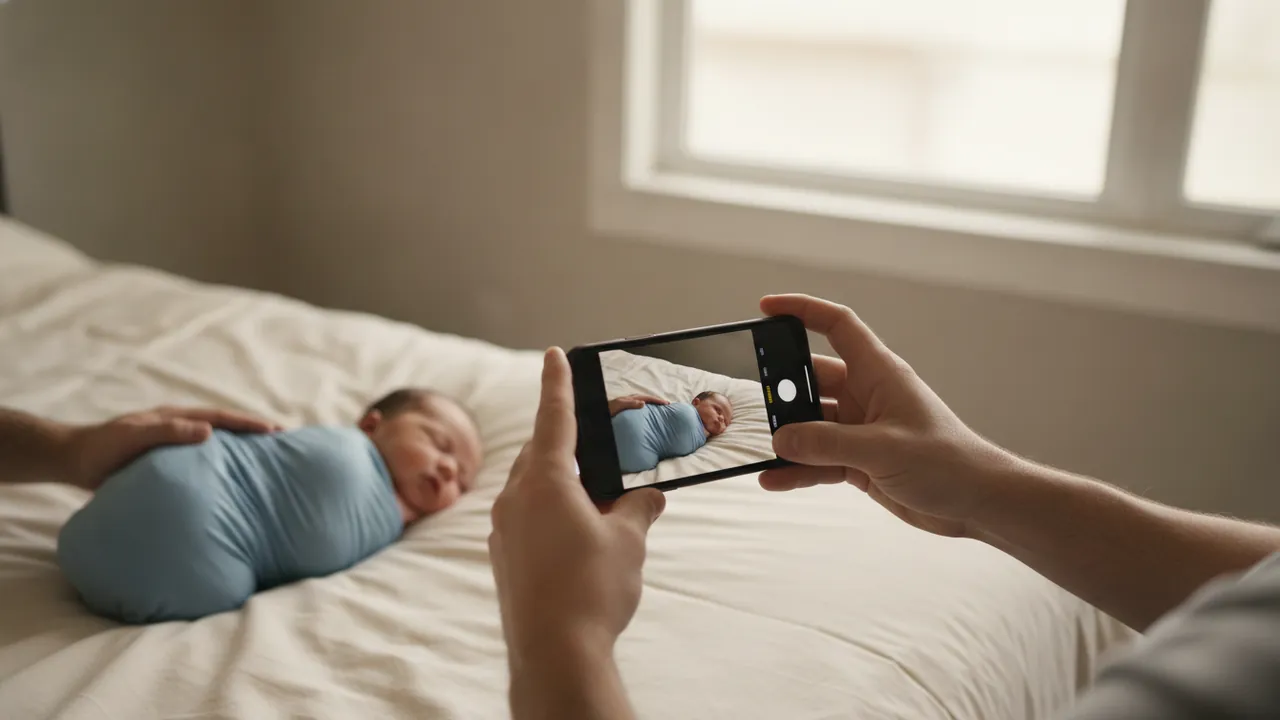
The best newborn photography tips are boring in the right way: shoot after a feed, use one big window, get close, keep a hand on the baby and stop while everyone is still calm. Gear matters far less than timing and patience. This page collects the tips that change results the most, in the order you will use them. For the wider picture of newborn photography, start on the homepage.
Before you pick up the camera
Tip 1: Shoot after a feed, not before. A full, burped baby sleeps deeper and moves less. Many parents find mid-morning works well, roughly 9 to 11 a.m., because the light is soft and a feed has just finished. Every baby runs on a different clock, so use your own baby's calm stretch rather than a fixed hour.
Tip 2: Plan three to five shots. A short list keeps you from taking 200 near-identical frames. Good starters are a swaddled sleeper, a close-up of hands or feet, a parent's hand around a foot, and one wide shot of the room. The full session plan lives in our guide to a newborn photoshoot at home.
Tip 3: Warm the room and clear it. A comfortably warm room keeps a baby relaxed in a diaper or light layer. Clear clutter from the background too. A plain wall or bedsheet looks calmer than a busy shelf, and it costs nothing.
Light and focus
Tip 4: Use one window and turn off everything else. Mixed lamp and daylight gives skin a patchy yellow and blue cast. Put the baby about one to two meters from a large window with the light falling from the side. Where to stand and what to do on a gray day are covered in our newborn photography lighting guide.
Tip 5: Skip the flash. The American Academy of Ophthalmology says there is no proven damage to a baby's eyes from camera flash. The reason to skip it is that a sudden burst can startle a sleeping baby, and direct flash flattens skin and washes out the soft look window light gives you.
Tip 6: Focus on the eyelashes, the nose or the nearest hand. On a phone, tap the baby's face and lock focus and exposure if your phone allows it. Newborn skin is smooth, so blur on the wrong spot shows quickly. Our phone guide covers the settings in detail.
Composition: simple moves that help
- Get closer than feels polite. A newborn is tiny, and a wide shot makes them tinier. Fill the frame with a face, a fist or a pair of feet.
- Shoot at the baby's level. Hold the phone at eye level with the baby, or shoot from directly above for sleepers. Avoid shooting up the nose from below.
- Use parents for scale. A grown hand beside a tiny foot tells the story better than any prop.
- Leave empty space. A baby small in a plain frame looks peaceful. It also leaves room to crop later.
- Use burst mode. A yawn, a stretch or a sleepy smile lasts less than a second. Shoot a burst and pick the best frame.
Try black and white for blotchy or reddish skin. Newborns often have peeling, flaky patches, acne or a yellow tint, and it is all common. A monochrome edit evens the tones in seconds, and our newborn photo editing page shows how to keep the result natural.
Keeping the baby calm
A fussy baby is not a failed session. It is information. Feed, burp and change the diaper first, keep the room warm, and use gentle white noise or a steady sway between setups. If the baby cries for more than a minute or two, put the camera down and hold them. Shoot in short bursts of 15 to 20 minutes, with breaks, and finish early if you need to. Another day will give you another chance, and the baby will look different in a week anyway.
Wrap only a sleeping baby, on the back, with the swaddle no higher than the shoulders, and loosen or stop swaddling once the baby shows signs of rolling. A baby who is awake and wriggling does not need to be wrapped for a photo. Shoot awake moments, hands and in-arms shots instead.
Safety tips that belong on every list
The American Academy of Pediatrics recommends that babies sleep on their backs on a firm, flat surface with no soft bedding, and photo sessions do not change that. Two rules cover most of the risk:
- An adult keeps hands on or right beside the baby at all times, especially on a bed, couch or any raised surface.
- Nothing soft goes near the nose and mouth. Skip pillows, loose blankets and props that enclose the baby.
Many viral poses with a baby balanced on a hand, hanging from a branch or tucked in a bowl are edited composites. In each frame, a parent or assistant holds the baby, and the pieces are merged afterward. That is a professional technique, not a home one. Our safe newborn poses for beginners page lists supported poses you can do yourself.
Mistakes that ruin good shots
- Waiting for the perfect pose. Newborns do not hold poses. Take the shot while the baby is relaxed.
- Chasing the sleeping look when the baby is awake. Photograph the baby you have. Wide-open eyes, a stretch or a frown are real and sweet.
- Too many props. A basket, a bow and a headband compete with a face that is only a few inches wide.
- Editing too hard. Heavy skin smoothing erases what makes the baby look like your baby. Brighten, crop and fix the color, then stop.
- Skipping the sharing check. Remove location data and check privacy settings before posting.
Age also changes what is easy. Our page on when to take newborn photos explains why photographers favor the first two weeks and what still works later.
Newborn photo app: join the waitlist
Stickers, frames and posing guides for newborn photos are in the works. Leave your email and we will send one message when the app launches. No spam.
Frequently asked questions
What is the single most useful newborn photography tip?
Shoot by a large window right after a feed. Soft side light and a full, drowsy baby fix more problems than any camera or editing app can. Keep a hand on the baby, skip the flash, and get close to faces, hands and feet instead of shooting the whole room.
What time of day is best for newborn photos?
Mid-morning, roughly 9 to 11 a.m., suits many families because the light is soft and a feed has just finished. The right hour is really the one when your baby is fed, warm and calm. If that is mid-afternoon, shoot then and avoid harsh direct sun.
How do I photograph a newborn's tiny details?
Move the phone or lens close, tap the spot you want sharp and hold still. Use window light from the side so lashes, fingers and creases show texture. Parent hands in the frame give scale. Take a short burst, because newborn fingers and toes curl and uncurl constantly.
Should I edit newborn photos in black and white?
Black and white is a good fix for blotchy, red or yellow-toned skin, which is common in the first weeks and not a problem. It also suits busy backgrounds. Keep a color copy too, since the soft pink and cream tones are part of what you will want to remember.
How many photos should I take in a newborn session?
Expect to take 100 to 300 frames to end up with 10 to 20 keepers, because most are lost to blinks, blur and tiny movements. Shoot bursts of awake moments and a few steady frames of sleep. Delete the near-duplicates the same day while you remember which ones felt right.