When to take newborn photos
By the Newborn Photo App team · Updated
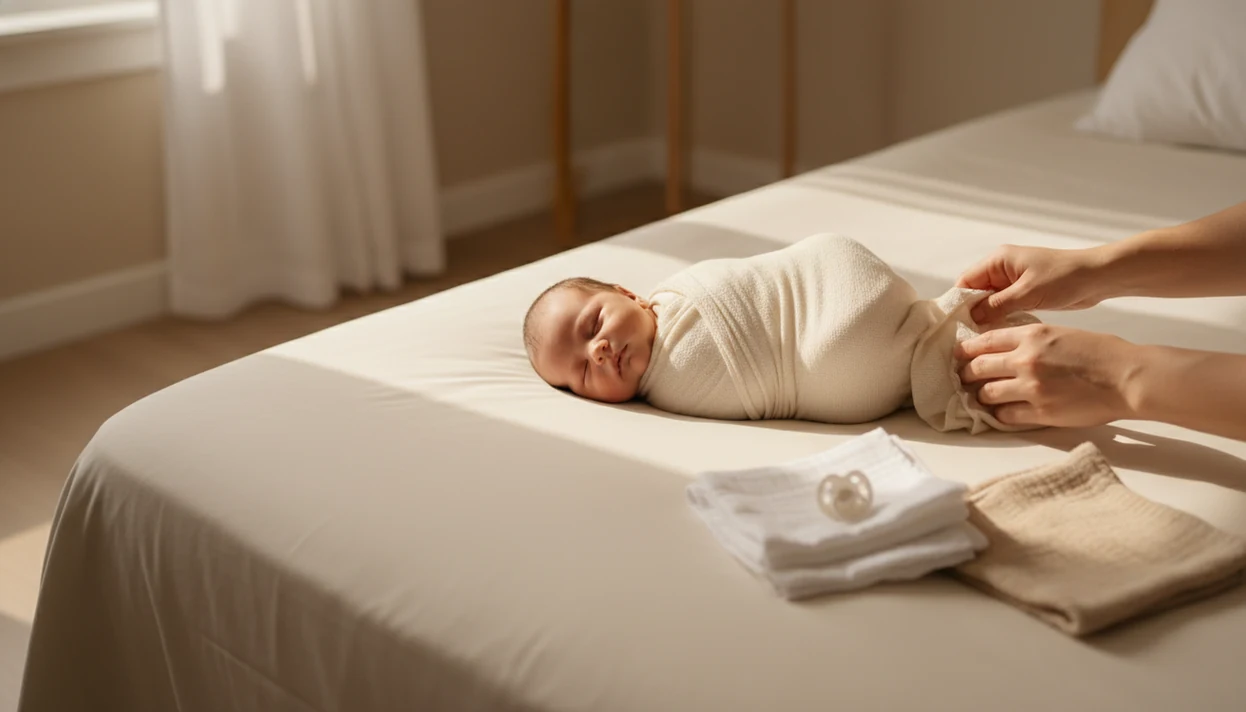
The best time to take newborn photos is usually when the baby is 5 to 14 days old, but that is a photographer's convention, not a medical deadline. Babies that age sleep deeply and stay curled up, which makes classic sleepy portraits easier. A baby who is 3 or 6 weeks old can still have lovely photos, just in a different style.
Why photographers say 5 to 14 days
Photographers who specialize in newborns usually recommend booking within the first two weeks, with many aiming for about 7 to 10 days. Their reasons are practical.
- Sleep. Very young babies sleep for long stretches, so a gentle, still session is easier.
- Posture. Newborns tend to keep a curled, tucked position that looks "newborn" in photos.
- Calm. After the first two weeks, babies are generally more alert and less willing to stay settled during handling.
- Skin and tummy trouble. Photographers often mention baby acne, peeling skin, gas and fussiness appearing in weeks two to four, which can interrupt a session or show in the pictures.
Notice that all of these describe the photos, not the baby's health. Nothing medical happens on day 15 that makes pictures unsafe or pointless. For how sleepy-baby poses are set up, see our guide to safe newborn poses for beginners.
Is a later session too late?
No. Plenty of people ask whether 2 weeks, 3 weeks or 7 weeks is too old for newborn photos. The honest answer is that none of those is a cut-off. Photographers do photograph babies at 3 to 6 weeks. Those sessions simply lean towards awake, open-eyed and lifestyle shots rather than tightly curled poses.
At around 4 weeks a baby is often more alert, stronger and less likely to curl up on cue. That is fine if you want expressions, eye contact, a stretch, a yawn or a family cuddle. If you are set on a sleepy curled look and your baby is 6 or 7 weeks old, expect that to be harder, and consider a different style instead. A 7-week-old is also well ready for a nice lifestyle session at home with a parent, a window and a blanket.
| Age | What tends to work | What gets harder |
|---|---|---|
| Days 1 to 4 | Hospital or first-days photos, hands and feet, skin-to-skin | Parent fatigue, limited energy |
| Days 5 to 14 | Sleepy, curled, classic newborn style | Parent recovery, a still-unsettled feeding routine |
| Weeks 3 to 6 | Awake, lifestyle, family and detail shots | Sleepy curled poses, more wriggling |
| Beyond 6 weeks | Smiles, eye contact, first expressions | Traditional "newborn" look |
If you want ideas for those first days, our page on hospital newborn photo ideas covers the first 48 hours. For the awake phase, one-month baby photo ideas picks up where this one stops.
When to wait longer
Some babies and families need more time, and that is a good reason to move the date.
- Recovery. A parent recovering from birth, surgery or a hard few days should not feel forced into a deadline.
- Illness or jaundice. If your pediatrician is checking on something, wait for the all-clear.
- NICU or early birth. For a baby who spent time in the neonatal unit or was born early, the right timing depends on their care team. One photographer recommends waiting until a NICU graduate has been home and healthy for one to two weeks, but that is one studio's practice, not medical advice. Ask your baby's doctor.
- A rough feeding start. A baby who feeds poorly will not sleep well for a session.
Whatever a studio's policy says, your baby's doctor has the final word on timing.
Booking a photographer vs DIY
If you are hiring someone, book during pregnancy. Studios often ask for a due date and then hold a slot of a week or two around it. Expect to be flexible, because baby sets the date.
If you are taking photos yourself, you have more freedom. There is no schedule to meet and no studio slot to waste. Pick a day when baby has just fed, the room is warm and you are rested. Read how to take newborn photos at home for the whole routine, and look at newborn photography lighting if you plan to shoot beside a window.
Picking a good time of day
For a sleepy baby, the usual advice is to plan around a feed. A full, dry baby tends to settle. Morning light is often soft and easy, though any window will do. Rooms for undressed shots are kept warm, since newborns lose heat easily, and photographers commonly work in rooms around 77 to 82 degrees Fahrenheit. That figure is photographer practice, not a medical standard, so judge by the baby's skin and comfort. Always keep a layer within reach.
The short version
Aim for the first two weeks if you want sleepy curled poses. Go later without guilt if you prefer awake shots or if life got in the way. The photos you actually take beat the ones you postponed for a perfect age. You can browse more guides at our newborn photography page.
If baby seems unwell, feeds poorly or seems unusually sleepy and hard to wake, call your pediatrician before any photo plans.
Frequently asked questions
What is the best age for newborn photos?
Most newborn photographers suggest 5 to 14 days, often 7 to 10 days, because babies sleep deeply and stay curled. That is a photographer convention for a particular style, not a medical rule. Later sessions also work well, with more awake and lifestyle shots in place of tightly curled sleeping poses.
Is 2 weeks too old for newborn photos?
No. Two weeks is inside the usual 5 to 14 day window, so it is a good time for classic sleepy portraits. Many photographers say a baby that age still sleeps deeply and has newborn posture. If you miss it, a session at three or four weeks is still very doable.
Is 7 weeks too old for newborn photos?
Seven weeks is later than the traditional window, but it is not too old. Expect a more alert baby who is harder to settle into curled poses, and plan awake, lifestyle and family photos instead. Smiles and eye contact start to show around this age, which many parents love.
Can I take newborn photos after 3 to 6 weeks?
Yes. Photographers do shoot at 3 to 6 weeks, using a more awake and natural style. Babies are stronger and more alert, so curled sleep poses are harder but expressions are easier. Use the baby's feeding rhythm and keep the session short and relaxed.
When should I take photos of a premature or NICU baby?
Ask your baby's doctor first. Many studios advise waiting until the baby is home, healthy and settled. That is a photographer practice, not a medical rule. Photos in the NICU itself depend on unit policy, so ask the care team what is allowed.