
Newborn sibling photos: safe ideas for big brothers and sisters
By the Newborn Photo App team · Updated
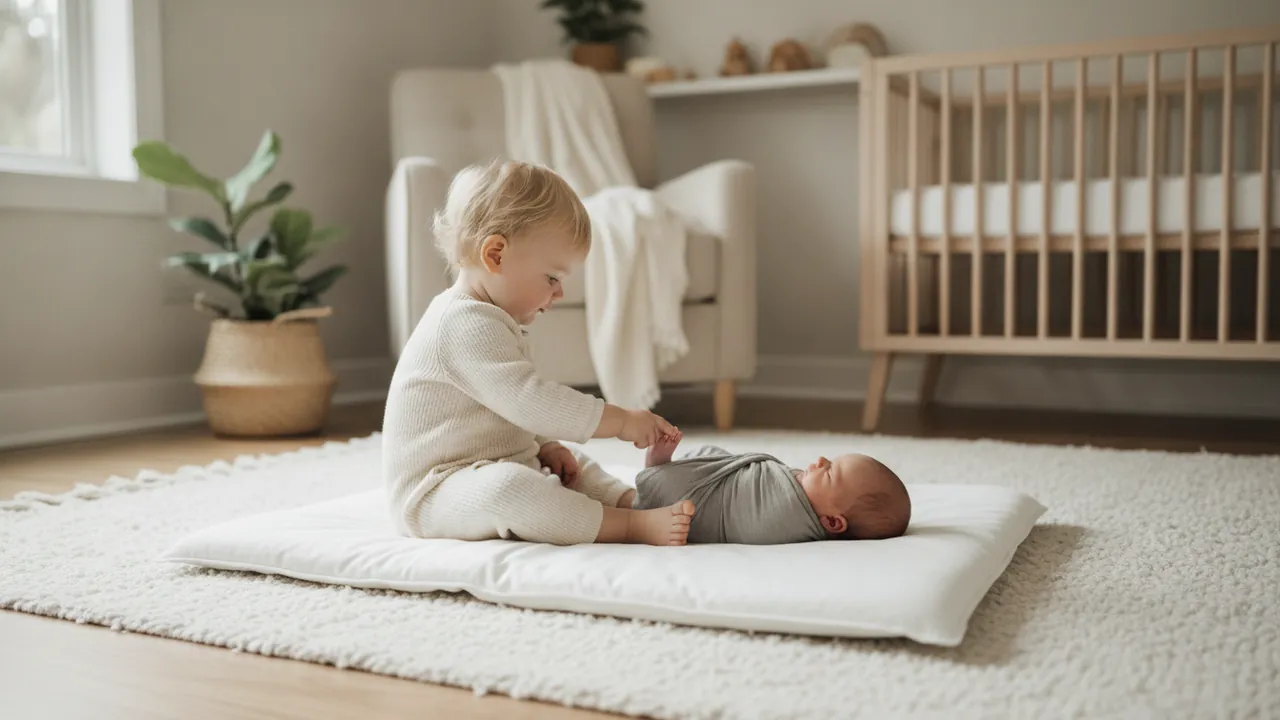
Newborn sibling photos are safest when the big brother or sister sits or lies next to the baby on a firm, low surface, with a parent's hands on the baby the whole time. A toddler should not hold a newborn on their own. No pediatric rule sets an exact age, and what matters most is the older child's calm, coordination and close adult supervision. Here is how to get a sweet sibling picture without a scare. It is a focused part of newborn photography, and it pairs with your wider newborn family photoshoot plan.
The safest setup, by age
| Sibling age | Safe approach |
|---|---|
| Under 2 | Side-by-side photos on the floor. The sibling lies or sits next to the baby. No lifting, no lap holds. |
| 2 to 4 | The sibling sits beside a baby supported by a parent. Touching a hand, a gentle kiss on the head or looking at the baby is plenty. |
| About 4 and older | A seated hold may work if the child is calm and coordinated, the baby is fully supported and an adult spots from arm's length. It is optional, never required. |
Photographers often use about four years as a practical threshold for a seated hold, but it is a habit and not a medical rule. If your child is wriggly, tired or upset, skip the hold, whatever their age.
Floor first, always
A low surface is the single best sibling-photo safety tip. A newborn on a firm blanket or rug on the floor cannot fall, and a toddler beside them cannot topple a baby off a sofa. Skip beds and couches for sibling shots, and never place the baby on a pillow, beanbag or raised surface with a child nearby. The American Academy of Pediatrics advises that babies sleep on their back on a firm, flat surface with no soft bedding, and safe-sleep photography guidelines say not to photograph a sleeping baby with an adult or sibling beside them in a bed or on a sofa. Keep sibling pictures for awake or drowsy moments, and move a sleeping baby to a bassinet or crib for solo shots.
Put one adult in charge of safety. Their job is to keep a hand within reach of the baby's head, neck and body and to watch both children. They do not need to be out of frame, since a parent's hand in a photo looks sweet and is often the best proof of how small the baby is.
Photo ideas that avoid holding
- Side by side on the floor. Both children lie on a plain blanket, heads close, the baby supported by a parent's hand just outside the frame.
- The big hand and the tiny hand. The older child places a finger in the baby's palm. A close crop of hands is easy and charming.
- A kiss on the head. The sibling leans in while a parent holds the baby upright.
- Looking in the crib. The older child peeks over the rail at a sleeping baby. Shoot from behind so the child's reaction fills the frame.
- Parent in the middle. One parent sits with the baby in the crook of an arm and the older child tucked into the other side.
- Sibling reading to the baby. A picture book, a seated child and a baby supported on a parent's lap.
Keep the older child happy
Big siblings can feel pushed aside during newborn week, so make the shoot about them too. Shoot their portrait first, when they are fresh. Offer a small job such as choosing the blanket or counting the baby's toes. Avoid bribing with sweets right before the camera comes out, which can turn into mess, and never force a kiss or a smile. A child who is allowed to be bored or silly gives better pictures than one who is told to say cheese.
Keep each sibling setup to a few minutes. Take short bursts, give a break, and stop the moment either child gets restless, hungry or upset. Toddlers have a short patience budget, and a fresh newborn needs feeds and rest. If they do not cooperate, try again tomorrow. It is a better plan than forcing one perfect frame.
What to wear
Dress the siblings in the same neutral colors as everyone else. Soft cotton, no buttons or beads near the baby and no scratchy sleeves. Skip headbands or accessories the sibling might tug. If the older child has a favorite stuffed toy, keep it out of the baby's reach. For ideas on the baby's clothing, see our newborn photoshoot outfits guide.
Newborn photo app: join the waitlist
Stickers, frames and posing guides for newborn photos are in the works. Leave your email and we will send one message when the app launches. No spam.
Frequently asked questions
How old does a child need to be to hold a newborn for a photo?
There is no exact age set by pediatric guidance. Photographers often use about four years as a rule of thumb, and only if the child is calm and coordinated, the baby is fully supported and an adult spots within arm's reach. When in doubt, skip the hold and use a side-by-side pose.
What if my toddler will not cooperate for newborn photos?
Keep it short and low-pressure. Photograph the toddler first, give a small job, and take quick bursts. Do not force kisses or smiles. If the child is tired or upset, stop and try again another day. A natural giggle or a curious glance gives a better photo than a forced pose.
Can my older child sit next to the baby on the bed or couch?
The floor is safer. A newborn on a blanket on the ground cannot fall, and a toddler beside them cannot knock the baby off a raised surface. If you must use a bed or couch, keep the baby in a parent's arms and have an adult within reach at all times.
Can I photograph my sleeping newborn with a sibling?
Safe-sleep photography guidelines advise against photographing a sleeping baby with an adult or sibling on a bed or sofa. Take sleeping portraits with the baby alone in a crib or bassinet on a firm, flat surface, and keep sibling pictures for awake or drowsy moments, with an adult supporting the baby.
How do I help my older child feel included in newborn photos?
Take the older child's portrait first, give them a small task such as choosing a blanket or counting toes, and photograph parents with each child on their own. Include a few frames of just the siblings and praise them for being gentle. Feeling seen makes cooperation easier.