
Lifestyle newborn photography: natural photos at home
By the Newborn Photo App team · Updated
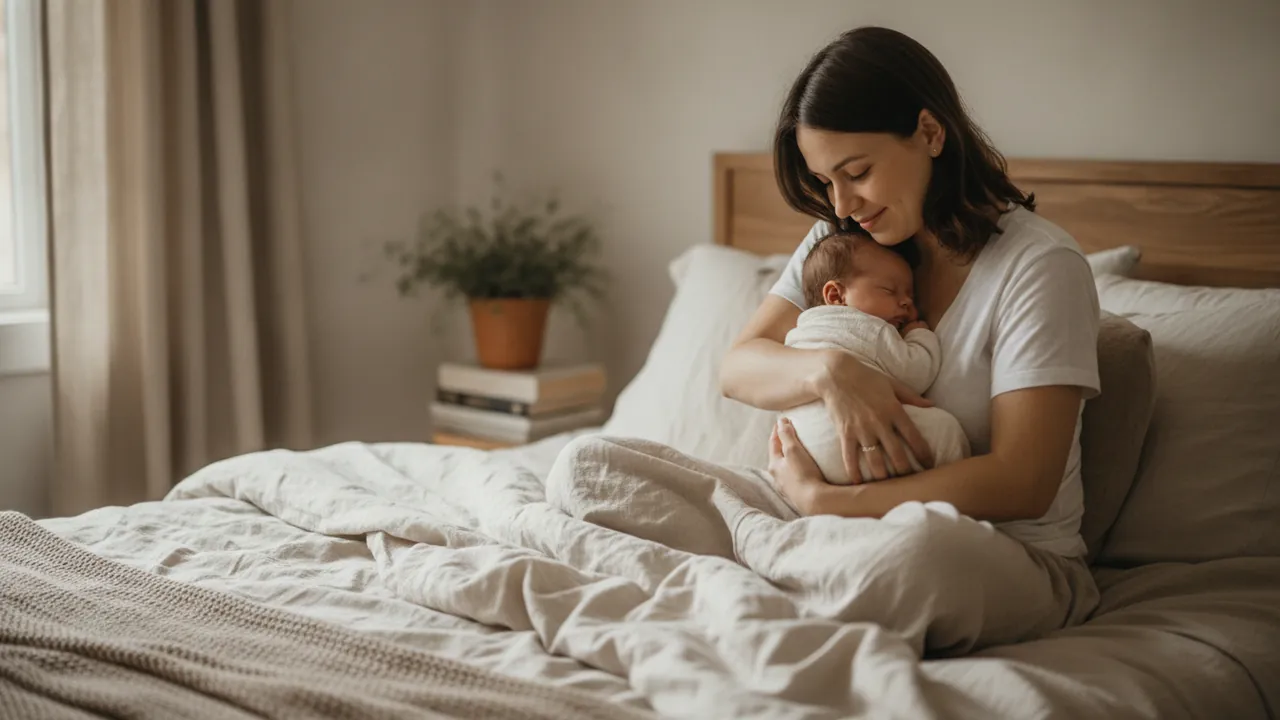
Lifestyle newborn photography documents a baby in everyday moments, usually at home, with little or no posing. Instead of wrapping a baby in a prop and directing every detail, the photographer (or you) captures feeding, cuddling, sleeping and the family around the baby as it really looks. Sessions typically last one to three hours, and the pictures feel like memories, not portraits. It is one style within newborn photography, and the easiest one to do yourself.
Lifestyle versus posed studio sessions
The two styles answer different wishes. Posed photography is built, and lifestyle photography is observed.
| Lifestyle | Posed studio | |
|---|---|---|
| Location | Your home: nursery, bedroom, living room | Photographer's studio |
| Direction | Light guidance, mostly watching | Photographer sets up poses and lighting |
| Props | Usually few: blankets, a rocking chair, your own bed | Beanbags, baskets, wraps, backdrops, headbands |
| Typical length | About 1 to 3 hours | About 2 to 4 hours, sometimes longer |
| Look | Natural, candid, family included | Styled, polished, often baby alone |
| Safety work | Simple: supported, supervised and bare surfaces | Needs trained handling, assistants and composites for dramatic poses |
Neither is better. Many families pick posed portraits for the wall and lifestyle for the story. If you love the idea of a basket or floral wrap, a posed session with a trained pro is the way to go. If you want to remember what the nursery, the blankets and the parents' arms actually looked like, lifestyle is the better fit.
What happens in a lifestyle session
There is no script, but a typical session runs like this:
- Arrival and light check. The photographer looks around for the brightest windows and the rooms that photograph best.
- Settling in. The family goes about a normal routine while the camera stays at a distance. Early frames are often of parents and the room, not the baby.
- Baby moments. A feed, a diaper change, a nap on a parent's chest, a bath if the family wants one.
- A few gentle prompts. Look at the baby, hold hands, sit on the bed together.
- Detail shots. Fingers, toes, lashes, a knit hat, the crib mobile.
Because nothing depends on the baby holding a pose, a lifestyle session works with a hungry, fussy or wide-awake newborn. The baby is not required to sleep, which is the biggest reason many parents choose it.
Is lifestyle photography safer?
It generally involves fewer risky setups, because there are no baskets, bowls or balanced poses. That does not remove the rules. The American Academy of Pediatrics recommends that babies sleep on their backs on a firm, flat surface with no soft bedding, and safe-sleep photography guidelines built on that advice, from the nonprofit Cribs for Kids, say not to photograph a sleeping baby on a bed, sofa or beanbag, or asleep with an adult or sibling. For photos, that means a few habits:
- An adult stays within reach of the baby at all times.
- A sleeping baby is photographed on the back in a crib or bassinet with a firm, flat surface and a fitted sheet, with no pillows or loose blankets.
- If a swaddle is used on a sleeping baby, it stays no higher than the shoulders, and swaddling stops once the baby shows signs of rolling.
- Nothing soft or draped covers the nose and mouth.
Lifestyle photographers also use composites less often, since there is rarely an unsupported pose to fake. If you do see a floating or head-in-hands image, it is an edit made from several frames in which an adult is holding the baby. Our guide to composite newborn photography explains how to tell.
How to take lifestyle newborn photos yourself
This style suits home photographers because it needs no special gear. Follow these steps:
- Pick the best-lit room. A big window with soft daylight beats any lamp. Turn off ceiling lights and use the window as the one light source, as in our newborn photography lighting guide.
- Make the bed or sofa look tidy, not styled. Plain white or neutral linens photograph well. Remove clutter from the frame.
- Ask a second adult to shoot. Lifestyle photos work best with parents in them. A helper, a timer or a phone on a stable stand makes that possible.
- Wait for real moments. A yawn, a stretch, a hand on a cheek. Shoot bursts and choose later.
- Frame parents and baby together. Skin-to-skin, a chin resting on a head or hands around a foot give scale. Ideas are in our page on newborn photos with parents.
- Stop early. Short sessions with a calm baby beat long ones with a crying baby.
The full plan, including timing and safety, is in our guide to a newborn photoshoot at home.
Lifestyle photo ideas that work at home
- Feeding. A bottle or nursing moment from behind or beside, showing a hand and the baby's profile.
- Skin to skin, awake. A parent reclined and fully awake, baby held on the chest with nose and mouth clear. Photograph it, then move a sleeping baby to the crib.
- The crib reveal. A wide shot of the nursery with the baby asleep in the crib, shot from the doorway.
- Morning light on the bed. Parents sitting on a made bed holding an awake baby, with an adult's hands on the baby the whole time.
- Tiny details beside everyday objects. A foot next to a wedding ring or a favorite mug for scale.
- Bath time. A warm, close, supervised moment, with the camera well away from the water.
- Dad or grandparent holding the baby. Shot from the side with window light on both faces.
More options by style sit on our newborn photo ideas page.
Preparing for a lifestyle session with a photographer
If you hire a photographer, the prep is light. Tidy the rooms you want photographed without staging them, open the curtains, and pick simple outfits in two or three coordinated colors. Have the baby fed shortly before the photographer arrives, and keep diapers, wipes and a spare outfit within reach. Tell the photographer about any rules, such as no photos in a certain room, and agree on how images may be shared.
Ask what the price includes. Some photographers price home sessions at roughly the same as studio sessions, and one 2026 pricing guide reports home rates 10 to 15 percent below a studio's usual price, with a $50 to $150 travel fee sometimes added. Our page on newborn photography prices explains typical costs and how to compare them.
What lifestyle photography does not do
A lifestyle session will not give you a baby curled in a flower or draped over a chair. Those are posed, and often composite, studio looks. It also leaves less control over the background, which means a messy home shows. If you want a dramatic portrait for the wall, book a posed session with a photographer who can explain how they keep the baby supported.
Newborn photo app: join the waitlist
Stickers, frames and posing guides for newborn photos are in the works. Leave your email and we will send one message when the app launches. No spam.
Frequently asked questions
What is the difference between lifestyle and posed newborn photography?
Lifestyle photography records real moments, such as feeding and cuddling, usually at home with few props. Posed photography is staged in a studio, with wraps, beanbags and backdrops chosen by the photographer. Lifestyle is more candid and includes the family. Posed is more polished and often features the baby alone.
How long does a lifestyle newborn session take?
Most last about one to three hours, shorter than many posed studio sessions, which can run two to four hours. The time covers feeds, diaper changes and soothing. Many photographers stop when the baby is tired, and some families schedule extra breaks if the baby is hungry or fussy.
Does lifestyle newborn photography use composite images?
Rarely, because there are few unsupported poses to fake. Composites are mainly used in posed work, where several frames are merged so the baby looks propped or floating while an adult supports them in every frame. If a photographer offers dramatic poses, ask how the baby is supported.
What should we wear for an in-home lifestyle session?
Wear soft, comfortable solids in two or three colors that sit close together, such as cream, gray and dusty blue. Skip large logos and busy patterns, which pull the eye from the baby's face. Pick tops that make skin-to-skin easy, and keep jewelry off if it could scratch the baby.
Is a lifestyle newborn session cheaper than a studio session?
Not always. Some photographers price home sessions about the same as studio sessions, and one 2026 pricing guide reported home rates 10 to 15 percent lower, with a $50 to $150 travel fee sometimes added. Compare the total for the number of edited images you actually want.